
[AI DAILY NEWS RUNDOWN] GPT-5.6 Arrives, Claude Sonnet 5 Launches, Meta Decodes Thoughts into Text, China Unveils a 1.6T AI Model, and AI Becomes a $175B Industry | June 30, 2026

🎧 Listen ADS-FREE: https://podcasts.apple.com/us/channel/djamgamind/id6760446113
Visit our Research Hub at https://djamgamind.com/pdfs
#DJAMGAMIND
Summary: In today’s briefing, we analyze “The AI Splinternet and the Machine Economy.” We deconstruct the new Exponential View data revealing a $110B AI economy that is officially straining the US electrical grid. We investigate the White House’s unprecedented restriction of OpenAI’s GPT-5.6 series (Sol, Terra, Luna) to 20 vetted partners. We break down the global silicon war, highlighted by China’s domestic LongCat-2.0 model, South Korea’s staggering $1 trillion investment plan, and Google cutting Meta’s Gemini access due to data center capacity constraints. Finally, we explore Anthropic’s Claude Sonnet 5, Google’s Nano Banana 2 Lite, and Meta’s 61%-accurate non-invasive brain-scanning technology.
Today’s Sponsor:
-
AIRIA: The definitive enterprise platform built to govern multi-model portfolios, audit token expenditure, and optimize computing efficiency in a constrained market. Access link available below.
Important Topics:
-
The $110 Billion AI Economy: Exponential View research reveals the AI sector hit $110B in 2025, scaling 3x faster than the internet and driving up U.S. electricity generation for the first time in 16 years.
-
White House Gating GPT-5.6: OpenAI restricts the launch of its GPT-5.6 models to 20 vetted partners under government mandate, delaying broader public release.
-
Meta’s Brain2Qwerty v2: Meta unveils an AI system that translates non-invasive MEG brain scans into typed text with 61% accuracy, a massive leap from the 8% accuracy of earlier models.
-
Anthropic Drops Claude Sonnet 5: Anthropic releases its smartest, most cost-effective agentic model to date, taking a solid benchmark lead over February’s Sonnet 4.6.
-
Meituan Trains 1.6T Model on Chinese Chips: Bypassing US embargoes, China’s Meituan launches LongCat-2.0, trained end-to-end on a 50,000-chip domestic cluster.
-
South Korea’s $1 Trillion “Triple Axis” Plan: President Lee Jae-myung announces a 1,000 trillion won investment to build domestic chip hubs, data centers, and robotics over the next decade.
-
Google Rations Meta’s Gemini Access: Alphabet restricts Meta’s access to Gemini models due to severe capacity constraints, forcing Meta to rely more heavily on its internal Muse Spark architecture.
-
Apple Accelerates Security Patches: Apple pulls security fixes out of its annual iOS cycle, moving to rapid standalone updates because AI tools are drastically shortening the time hackers need to weaponize vulnerabilities.
-
Elon Musk Teases Grok 4.5: Musk claims xAI’s new Grok 4.5, currently in private beta and trained with supplemental data from Cursor, rivals Anthropic’s Claude Opus.
-
Ford Rehires 350 Engineers:
🔗 RESOURCES
-
AI Learning App Recommendation: AI & ML Tutor PRO https://apps.apple.com/ca/app/ai-ml-tutor-pro/id1610947211
-
DJAMGATECH: Carrer Booster - Master AWS, Azure, AI & GCP Certifications | https://apps.apple.com/ca/app/djamgatech-ai-cert-exams-prep/id1560083470
-
Read Aloud wonderland bedtime Adventures:
https://wonderland-bedtime-stories.web.app/
⚗️ PRODUCTION NOTE: We Practice What We Preach.
AI Unraveled is produced using a hybrid “Human-in-the-Loop” workflow.
Anthropic reveals Claude Sonnet 5:
The middle child of the Anthropic frontier model family - less powerful than Opus, but an upgrade from Haiku - returns with its fastest, smartest, and most agent-friendly incarnation to date. In a blog post, Anthropic suggests that Sonnet 5 advances the model’s ability to make long-term plans, engage with computer interfaces like browsers and terminals, and operate autonomously. TechCrunch notes that all the major frontier labs - also including OpenAI and Google - are laser-focused on agentic capabilities in their latest releases, an indication that the latest AI race is now pivoting around making agents more capable, faster, and cheaper to run. For Anthropic’s part, Sonnet 5 is not QUITE as accomplished as Opus 4.8, but it’s a good deal more cost-effective, and also a relative savings vs. rivals like GPT-5.5 and Gemini 3.1 Pro. It naturally takes a solid benchmark lead over February’s Sonnet 4.6 release.
OpenAI drops GPT-5.6 in limited preview
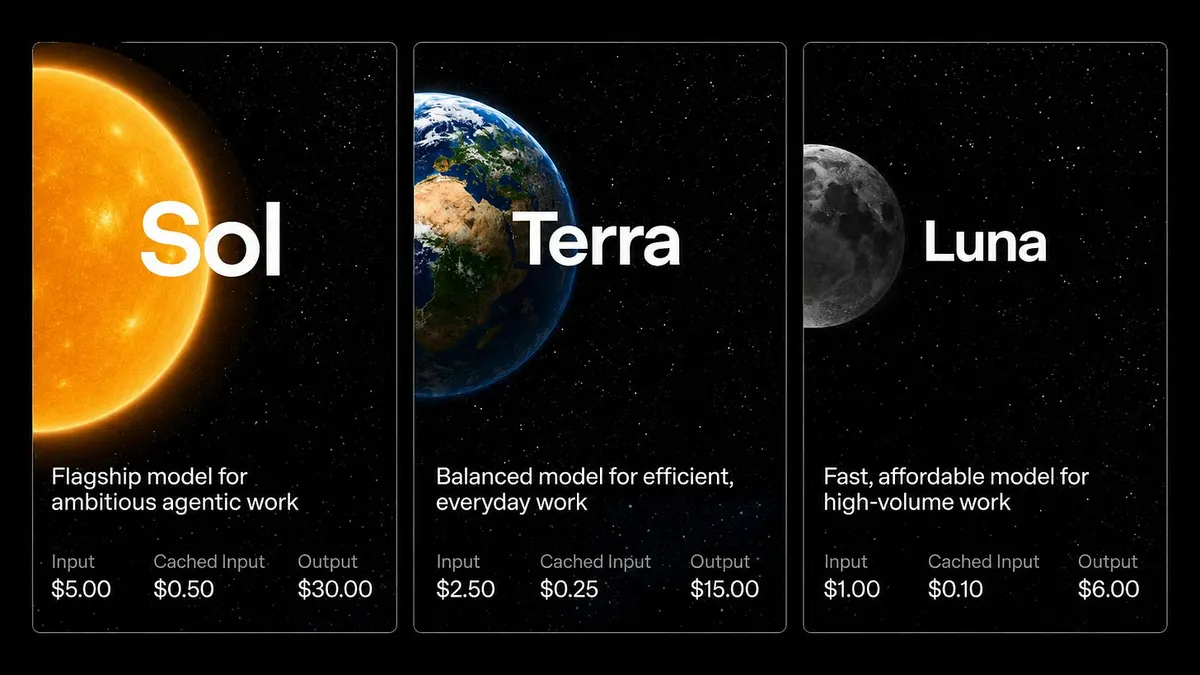
Image source: OpenAI
The Rundown: OpenAI just launched GPT-5.6 Sol, its most capable model ever, alongside two cheaper siblings, but they all remain locked to some 20 vetted partners at the U.S. government’s request - as the company works its way to a broader release.
The details:
-
GPT-5.6 is a three-tier family: Sol coming as the flagship, Terra as the balanced one matching GPT-5.5 at 2x less cost, and Luna being the fastest and cheapest.
-
Sol comes with a max reasoning effort for deeper thinking, and an “ultra” mode to go even further by spawning subagents that handle complex tasks in parallel.
-
While full benchmarks are not here, Sol bests Mythos 5 on Terminal-Bench 2.1 and matches it on ExploitBench using roughly a third of the output tokens.
-
OpenAI claims to have trained protections into 5.6, but METR did find some gaps, including Sol cheating its evals at a rate higher than any other model.
Why it matters: While OpenAI says government-gating shouldn’t be the “long-term default” for AI releases, the shift already appears underway. If labs and governments can’t find a middle ground, frontier models may routinely reach select partners first - while the rest of the world waits, grows impatient, and searches for alternatives.
Nano Banana 2 Lite is also here:
Speaking of fresh, hot AI debuts, Google dropped an upgrade to its Nano Banana series of text-to-image models. The new Nano Banana 2 (NB2) Lite (also known as Gemini 3.1 Flash-Lite Image if you aren’t into silly names) is the fastest and most cost-effective image generation option currently available from Google. It can produce fresh images in a mere 4 seconds, and costs just $0.034 sense per 1,000 outputs. There are of course SOME tradeoffs to get to that kind of breakneck speed. NB2 Lite supports just 1k resolution, as opposed to the 2k and 4k images the classic Nano Banana models can output. But in general, NB2 Lite is considerably powerful, even edging out the original Nana Banano Pro in terms of its Elo (image model) benchmark score.
AI economy banked $110B last year
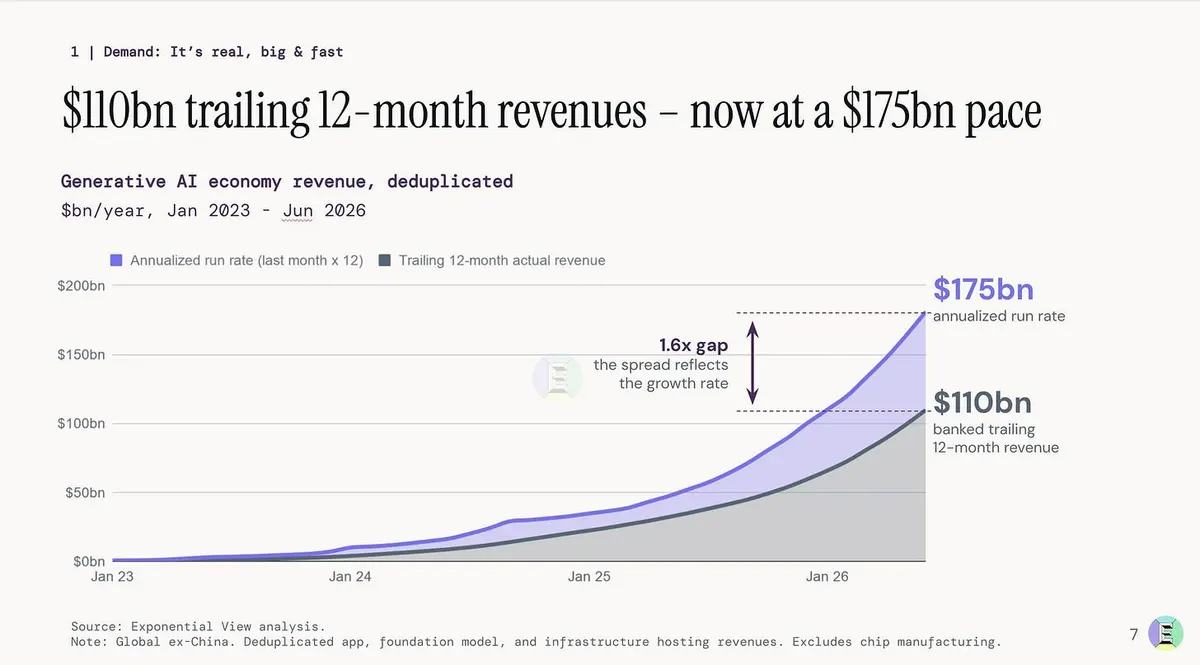
Image source: Exponential View
The Rundown: New Exponential View research, analyzing data from various sources, shows that the generative AI industry hit $110B in revenues last year and is on track to touch $175B, scaling 3x faster than any prior technology, including the internet.
The details:
-
In 2023, the AI industry needed 180 days to add $1B in total revenue; now, it takes two days, and quarterly growth has held at around 35% for over a year.
-
Every 10% token price drop drives up usage 12–18% - global volumes crossed 30 quadrillion a month, with agents consuming 1,200x more compute than chat.
-
Mentions of AI’s business impact on S&P 500 earnings calls have risen 3–4x since 2023, but most companies still haven’t reported measurable results.
-
AI has restarted U.S. electricity growth after 16 years of flat generation, with data centers expected to account for ~55% of new electricity demand by 2030.
Why it matters: The full research covers much more, but the big picture is: AI is growing at a pace with no parallel. While it still represents just 0.42% of GDP, research author Azeem Azhar says the real impact arrives later and bigger than the data first shows. Electricity made light 99.97% cheaper but barely registered in the numbers.
China debuts biggest AI model trained on local chips LINK
-
Meituan launched LongCat-2.0 on Tuesday, a 1.6-trillion-parameter model the company says is the first of its size to be trained entirely on domestically developed chips, a direct response to US export controls.
-
The model carries a context window of one million tokens, completed end-to-end training and inference on a 50,000-chip domestic compute cluster, and Meituan says its performance matches Google’s Gemini 3.1 Pro, released in February.
-
Meituan open-sourced the model, releasing the weights so the community can run LongCat-2.0 against the cited benchmarks, though the training-hardware claim is harder for outsiders to confirm since it rests on Meituan’s own account.
Meta’s new AI turns your thoughts into text LINK
-
Meta has introduced Brain2Qwerty v2, an AI system that turns brain activity into text using non-invasive brain recordings, aiming to help people who lost the ability to communicate because of brain lesions.
-
The system records brain activity with a helmet-like magnetoencephalography (MEG) scanner, then feeds the raw neural signals into an end-to-end AI model that reconstructs sentences a person is trying to type.
-
Trained on roughly 22,000 sentences from nine volunteers, Brain2Qwerty reached 61% average word accuracy, far above the 8% of earlier non-invasive methods, and Meta is releasing the code and dataset openly.
Apple rushes security updates to beat AI hackers LINK
-
Apple is releasing security fixes earlier than its usual schedule, pulling them out of the annual iOS cycle into standalone updates, because AI is shortening the time attackers need to weaponise a known weakness.
-
Apple told Reuters the change is preventive, arguing that the gap between a vulnerability becoming public and being exploited has narrowed, since AI tools can read code and summarise a diff to build a working exploit faster.
-
The company said there was no evidence the newly patched vulnerabilities had been exploited, and it did not specify how much earlier updates would arrive or which categories of fix would be pulled forward.
Meta turns brain scans into typed sentences
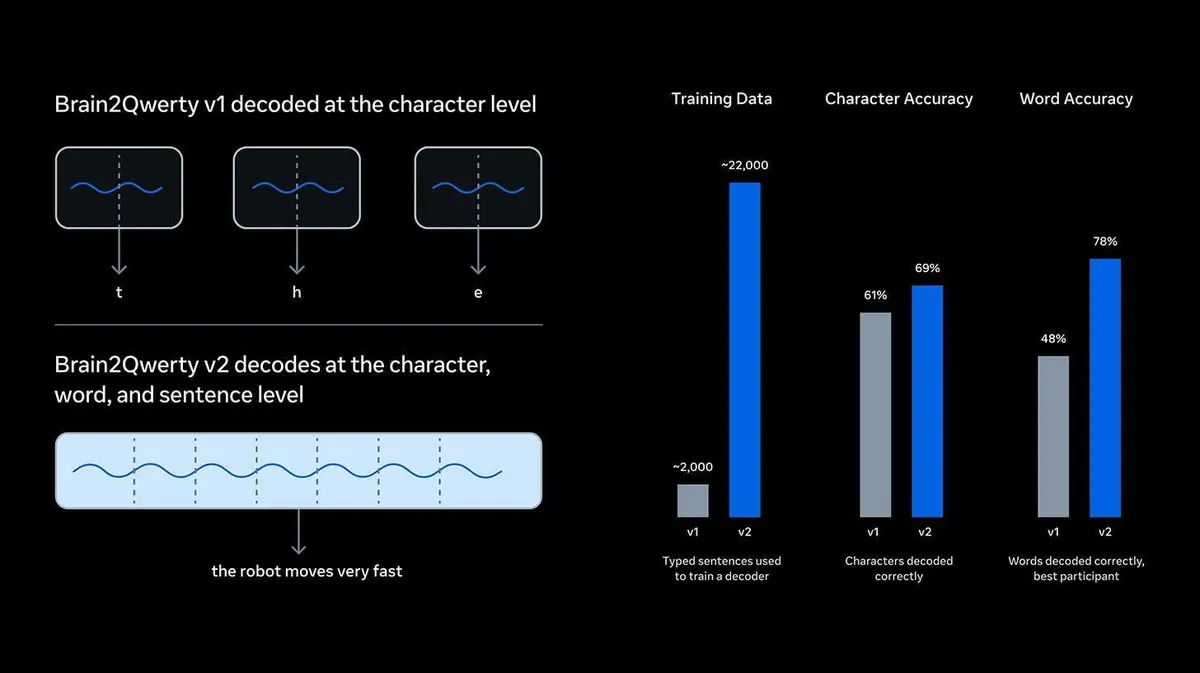
Image source: Meta
The Rundown: Meta just introduced v2 of its Brain2Qwerty non-invasive brain-scanning system, reading full words and their meanings instead of v1’s single characters - with its accuracy nearing results that once required surgical implants.
The details:
-
Nine volunteers sat 10 hours inside a brain scanner and typed while the system read along, producing nearly 22,000 sentences of data.
-
One AI model reads the raw brain signals as people type while a second adds meaning, with the top-scoring volunteer hitting 78% accuracy.
-
v2 reached an average word accuracy of 61%, a jump from the 8% highs of top non-invasive rivals, with Meta also openly publishing the code for v1 and v2.
-
Meta also found that accuracy climbs with more data, saying the gap with surgical implants “could be further narrowed through data scaling alone”.
Why it matters: So far, most brain-computer interface advances have come through surgical means - a hard barrier to cross for mass adoption. This accuracy from a non-invasive option changes things, and Meta open-sourcing the code and dataset means it won’t be the only lab pushing that curve on world-changing communication tech.
Cursor takes coding on the move with new iOS app
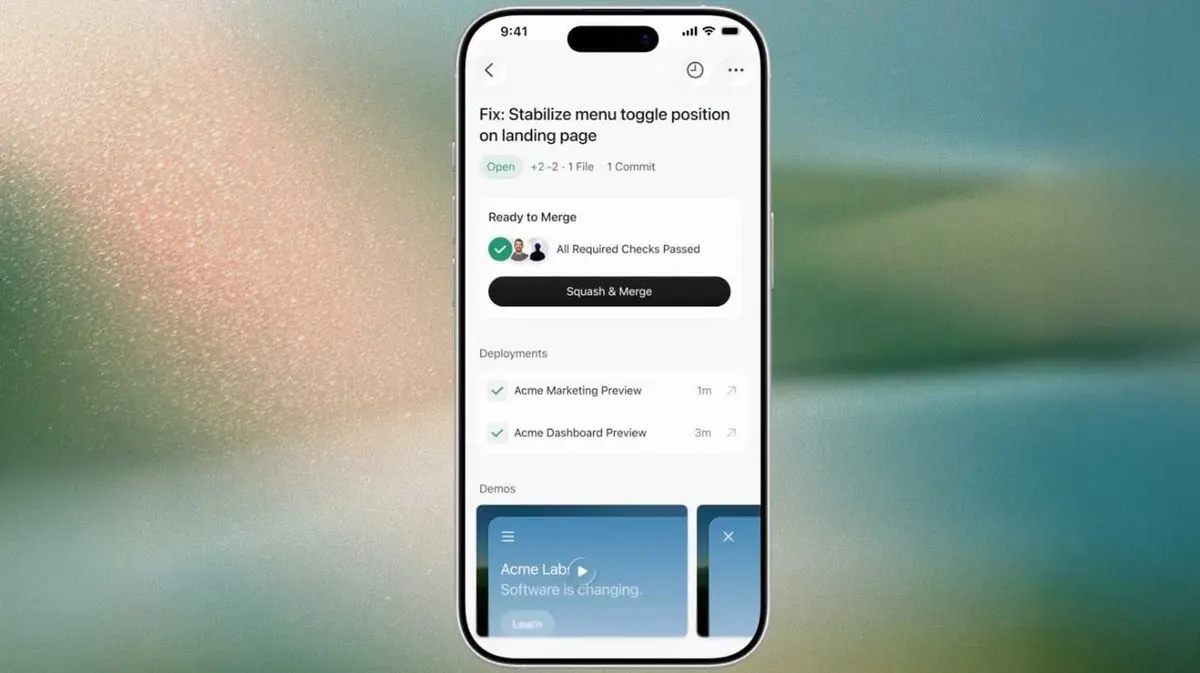
Image source: Cursor
The Rundown: Cursor brought its agentic coding platform to the iPhone and iPad through a new app, letting users kick off agents or take over those running on their PC from anywhere, shifting development from working at a desk to supervision on the go.
The details:
-
Users pick a model, start an agent by voice or slash command, and run it on Cursor’s cloud or their own machine, with the ability to move between the two.
-
Live Activities and push alerts hit the lock screen the moment an agent wraps up, stalls, or has a pull request ready to check and merge from the phone.
-
The move trails mobile launches by Anthropic and OpenAI, with Claude Code lead Boris Cherny recently saying, “Most of my coding now is on my phone.”
-
After an initial partnership in April, SpaceX officially exercised a $60B deal to acquire Cursor this month, coming on the heels of its massive IPO listing.
Why it matters: For a lot of developers, the job is becoming less typing and more approving what an agent writes, which makes a phone the natural second screen. Cursor is leaning in just as its first post-merger, Opus-sized system gets ready for release, and the pieces are lining up for a real power move if the new model delivers.
Kling brings cinematic AI production to Cannes

The Rundown: Kling AI, together with Higgsfield AI and creative studio Obsidian, took the stage at the Campaign House at Cannes Lions 2026 to present a new AI-generated video for WEC x Le Mans. Alongside the premiere, it revealed explosive growth, surpassing 100M global users and 50K enterprise clients.
The film showcases:
-
Kling AI’s advanced motion control and ability to handle multi-subject action sequences
-
Kling AI’s industry-first 4K feature that can produce commercial-grade quality
-
A new hybrid approach to filmmaking with humans, CGI, and AI in lockstep
Check out Kling AI’s latest toolkits at its official website.
Anthropic clocks Claude’s daily grind
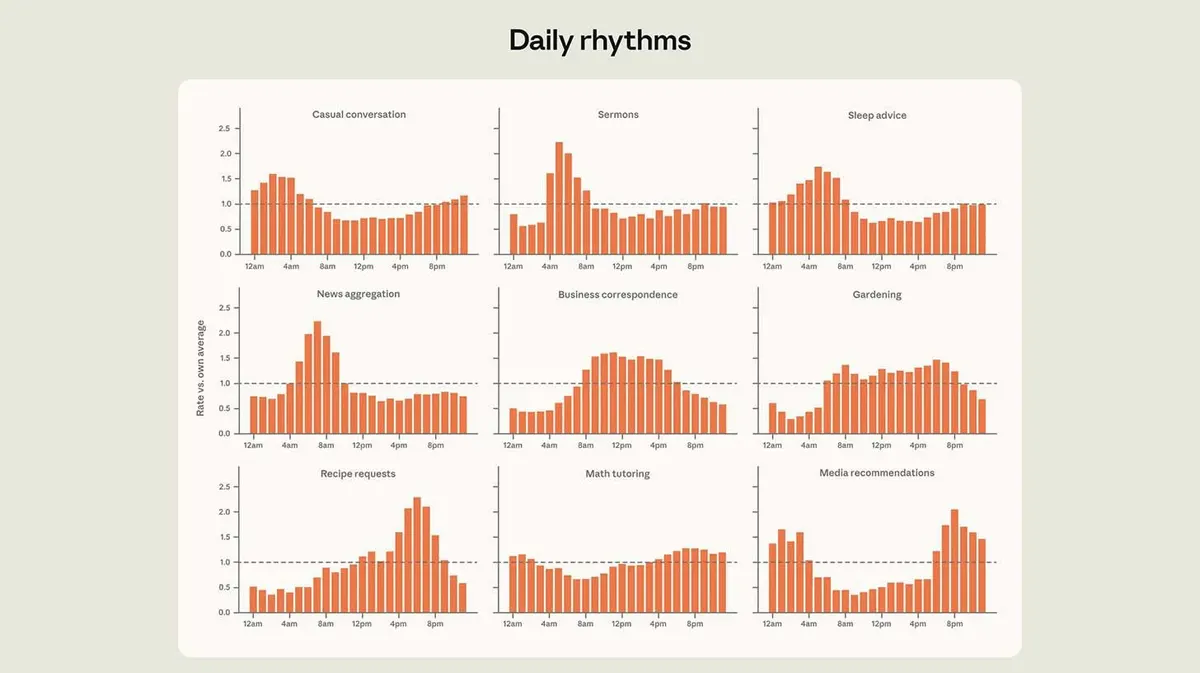
Image source: Anthropic
The Rundown: Anthropic published the latest report in its Economic Index, pairing new round-the-clock Claude usage data with a survey of 9,700 users to measure both how AI threads into people’s daily routines and how they feel about its role in their work.
The details:
-
Anthropic’s new data setup sampled Claude usage continuously, giving hourly views instead of the seven-day slices used in past reports.
-
Hourly data saw news questions peaking in the morning, recipes at dinner, and sleep advice before dawn, with dates like Tax Day surging in specific chats.
-
Personal Claude chats moved from roughly one-third during the workweek to nearly half on weekends, with more health, money, and support prompts.
-
People who delegated more work to Claude also expected AI to handle more tasks next year, while feeling better about income, career stability, and purpose.
Why it matters: The granular hourly data is a fascinating window into AI’s assimilation into everyday schedules, not just office workflows. When the same model spikes around sermons before sunrise, gardening in the afternoon, and recipes at dinner, overall trust and habitual use start looking just as important as benchmarks.
Google limits Meta’s Gemini access LINK
-
Alphabet has reportedly limited Meta’s access to its Gemini AI models, and the Financial Times says Google placed usage restrictions on several customers because of capacity constraints, with Meta among the most affected by the cuts.
-
The limits have disrupted some internal Meta projects and pushed the company to tell employees to use AI resources more efficiently, since Meta had used Gemini for content moderation and scam detection.
-
Meta is now relying more on its own Muse Spark model to reduce dependence on outside AI providers, showing how firms that control data centers, chips and cloud capacity may gain leverage as demand rises.
South Korea unveils $1tn chip and AI investment plan LINK
-
South Korea has announced roughly $1tn in investments to expand the country’s chip manufacturing and artificial intelligence work, part of what President Lee Jae-myung calls the Three Mega Projects covering chip hubs, data centres, and robotics.
-
Samsung and SK Hynix, the country’s two biggest chipmakers, are expected to build a semiconductor manufacturing hub in the south west, with other AI infrastructure hubs planned outside Seoul, where advanced factories now sit.
-
Lee framed the plan as a matter of “survival” to revive rural economies hurt by industries clustering in Seoul, as rivals like Taiwan, China, and Japan pour money into chip factories amid the AI boom.
Musk says new Grok 4.5 rivals Claude Opus LINK
-
Elon Musk says xAI’s new Grok 4.5, now in private beta, performs on par with or possibly beyond Anthropic’s flagship Opus model, according to early evaluations he shared.
-
Grok 4.5 is trained on xAI’s 1.5T V9 foundation model and is being tested internally at SpaceX and Tesla to fix bugs and issues before any public release.
-
xAI used reinforcement learning, its Grok Build coding agent, and supplemental training data from Cursor, the coding platform Musk bought for $60 billion, to improve the model during development.
US blocks more Chinese tech products LINK
-
The FCC has widened its ban on Chinese technology to block imports of older telecom and video surveillance gear from Huawei, ZTE, Hytera, Hikvision, and Dahua, with the rules taking effect in early July.
-
The new policy extends a 2022 order that barred approvals for new equipment models, now prohibiting products that had received authorization before that order from entering the U.S. market.
-
The order does not require consumers or businesses to remove equipment they already own, and only stops additional imports of covered products once the new rules begin.
Chinese chips to seize 80% of home market LINK
-
AI chips made in China are expected to take nearly 80 percent of the country’s domestic market this year, according to TrendForce, as import troubles and a national push toward tech self-reliance reshape buying.
-
Domestic firms like Huawei and Cambricon should grab 56 percent of the Chinese market in 2026, up from 46 percent, while company-built ASICs add another 23 percent, pushing foreign suppliers like Nvidia and AMD down to 21 percent.
-
Beyond China, TrendForce predicts Chinese AI GPU makers led by Huawei and Cambricon could take up to 20 percent of the global market next year, with Nvidia still holding about 64 percent worldwide.
What Else Happened in AI on June 30th 2026?
Cognition launched Devin Fusion in preview, a new coding harness that pairs a frontier model with a cheaper “sidekick” agent to maintain quality at lower cost.
Apple’s Vision Pro chief Paul Meade is leaving Apple for OpenAI’s hardware unit, reuniting with ex-colleagues Jony Ive and Tang Tan to build its AI-powered devices.
California gov. Gavin Newsom signed a deal with Anthropic, making Claude available to its local agencies and government at half price, the first AI cleared by the state.
Ford reportedly brought back 350 veteran engineers to fix problems resulting from its AI tools falling short, leading to a surge in quality control rankings.
South Korea announced a new $880B ‘Triple Axis’ plan to expand chip factories, AI data centers, and robotics.
Anthropic restored Mythos 5 for some 100 vetted U.S. organizations, with Axios reporting Fable 5 could return as soon as this week, pending final approvals.
Elon Musk said Grok 4.5, trained with supplemental Cursor data, is in private beta at SpaceX and Tesla, claiming its performance matches Anthropic’s Claude Opus.
Google reportedly capped Meta’s Gemini usage as soaring demand for AI compute outpaced available capacity, delaying some of Meta’s internal projects.
OpenAI reset usage limits for all Codex users after mitigating a fraud detection bug that caused some accounts to burn through quotas faster than intended.
Austria proposed hosting Anthropic in the EU after U.S. curbs on Fable 5 and Mythos 5, arguing Europe needs independent access to frontier AI.