
[AI DAILY NEWS RUNDOWN] US Approves GPT-5.6, Claude's Hidden "J-Space", and Beijing's Export Threats (July 08, 2026)
🎧 Listen ADS-FREE: https://podcasts.apple.com/us/channel/djamgamind/id6760446113
Visit our Research Hub at https://djamgamind.com/pdfs
Summary: In today’s briefing, we analyze “The Expansion of Internal Ecosystems and Geopolitical Retaliation.” We deconstruct OpenAI securing Department of Commerce approval for a wider rollout of GPT-5.6. We examine Anthropic’s shocking discovery of “J-Space,” a hidden internal workspace inside Claude’s neural network. We break down the escalating tech war, highlighted by Beijing discussing limits on foreign access to its most powerful AI models. Finally, we cover Meta’s new in-house Muse Image model, Apple’s $30 billion chip commitment with Broadcom, and a $1.4 trillion lawsuit targeting Meta over child safety.
Important Topics:
-
US Approves OpenAI’s GPT-5.6 Launch: OpenAI won approval from the US Department of Commerce to launch GPT-5.6 more widely on July 9 after weeks of federal technical evaluation. The broader rollout will also include its Terra and Luna models.
-
Anthropic Discovers “J-Space” Inside Claude: Anthropic published a paper claiming it found an internal workspace called “J-Space” inside Claude, allowing the model to separate background data-crunching from intentional processing.
-
Beijing Considers AI Export Restrictions: Chinese commerce officials met with ByteDance, Alibaba, and Z AI to discuss limiting the use of top models like Qwen and GLM-5.2 outside of China.
-
Meta Releases Muse Image Generator: Meta launched Muse Image, its first in-house AI image generator built by Meta Superintelligence Labs, available for free through the Meta AI app, Instagram Stories, and WhatsApp. The model ranks No. 2 on Arena’s leaderboards.
-
Apple Commits $30B to Broadcom: Apple extended its custom chip partnership with Broadcom through 2031, focusing on custom ASIC chips to speed up AI workloads.
-
Meta Glasses Force Camera Shutdown on Tampering: Meta is rolling out an update to its smart glasses that turns off the camera entirely if the built-in privacy LED light is tampered with or destroyed by modders.
-
Anthropic Brings Claude Cowork to Mobile: Anthropic extended its Claude Cowork agent to web and mobile in beta, utilizing a “Dispatch” feature to persist threads and route requests to the appropriate engine.
-
Microsoft Swaps Third-Party AI for Internal Models: Microsoft will power applications like Excel and Outlook using its internally built “MAI” models for everyday tasks to cut compute costs and reduce reliance on third-party labs.
-
DeepSeek Designs Custom AI Chip: Chinese AI startup Deepseek is building its own inference chip to reduce dependence on Nvidia and Huawei.
-
Four States Sue Meta for $1.4 Trillion: California, Colorado, Kentucky, and New Jersey are seeking $1.4 trillion in penalties from Meta, claiming the company built its platforms to be addictive to children.
-
DoorDash Grades AI Code Reviewers: DoorDash revealed its internal “DashBench” test, finding that a pairing of Kimi K2.6 and Fable 5 caught about two-thirds of past code problems at a cost of $3.81 per review.
-
Kyutai Generates Playable Rocket League: Kyutai and General Intuition released MIRA, an open-source world model that generated a playable 2v2 game of Rocket League entirely inside a neural network with no game engine.
#DJAMGAMIND
🔗 RESOURCES
-
AI Learning App Recommendation: AI & ML Tutor PRO https://apps.apple.com/ca/app/ai-ml-tutor-pro/id1610947211
-
DJAMGATECH: Carrer Booster - Master AWS, Azure, AI & GCP Certifications | https://apps.apple.com/ca/app/djamgatech-ai-cert-exams-prep/id1560083470
-
Read Aloud wonderland bedtime Adventures:
https://wonderland-bedtime-stories.web.app/
⚗️ PRODUCTION NOTE: We Practice What We Preach.
AI Unraveled is produced using a hybrid “Human-in-the-Loop” workflow.
OpenAI gets US approval to launch GPT-5.6 LINK
-
OpenAI won approval from the US Department of Commerce to launch GPT-5.6 more widely this Thursday, July 9, after weeks of technical evaluation and talks with federal officials over the model’s release.
-
The clearance follows an earlier, limited launch last month that restricted GPT-5.6 to government-approved organisations, with the Center for AI Standards and Innovation assessing the model before giving OpenAI the go-ahead for a wider release.
-
OpenAI kept a technical team in Washington during the review to answer questions from officials, and it will also launch its Terra and Luna models alongside the broader rollout of GPT-5.6.
Meta launches its first in-house AI image generator LINK
-
Meta has released Muse Image, its first in-house AI image generator built by Meta Superintelligence Labs, offering it for free through the Meta AI app, Instagram Stories, and WhatsApp.
-
The tool, code-named Mango internally, can make cartoonish images, custom ads, and interior decoration mockups tied to Facebook Marketplace, and it comes with presets and prompt-based editing to erase photobombers or build QR codes.
-
Meta is also adding new AI effects for Instagram Stories powered by Muse, and while everyday creation stays free up to a limit, heavier use requires a subscription plan; Muse Video is already in development.
Apple commits $30B to Broadcom for US-made chips LINK
-
Apple has extended its custom chip partnership with Broadcom through 2031, keeping the longtime supplier on board for AI hardware even as the iPhone maker moves more of its component work in-house.
-
The expanded agreement covers custom ASIC chips that can speed up AI workloads, and it appears Apple lacks the expertise to build these itself, which has prolonged its reliance on Broadcom.
-
Apple reportedly wants advanced AI servers to train models and run inference for Siri by early 2027, using a chip codenamed Baltra, a supersized M5 Ultra headed to the next Mac Studio.
Meta glasses now shut off camera if privacy light is tampered LINK
-
Meta will roll out a software update to its smart glasses that turns off the camera whenever the device detects that someone has tampered with or destroyed the built-in privacy LED light.
-
The change targets modders who drill into the LED light, going further than an earlier measure that prompts users to uncover the recording light when it is blocked with tape or other objects.
-
Meta’s VP of wearables Alex Himel told The Verge the update was coming weeks ago, after cheaper Meta Glasses launched without Ray-Ban branding, and acknowledged the company was aware of rising misuse.
Anthropic’s Claude Cowork now runs on your phone LINK
-
Anthropic has extended Claude Cowork, its agent for general knowledge work, from the desktop app to web and mobile, launching in beta to Max subscribers first so tasks can continue even with the laptop closed.
-
A feature called Dispatch keeps one persistent thread that routes each request to the right engine, sending development work to Claude Code and knowledge work to Cowork, then messaging back the result instead of every step.
-
Anthropic sampled 1.2 million sessions from over 600,000 organisations and found business process work led at 33.4%, content creation followed at 16.4%, while software development made up just 8.7%.
Meta’s new in-house AI image model
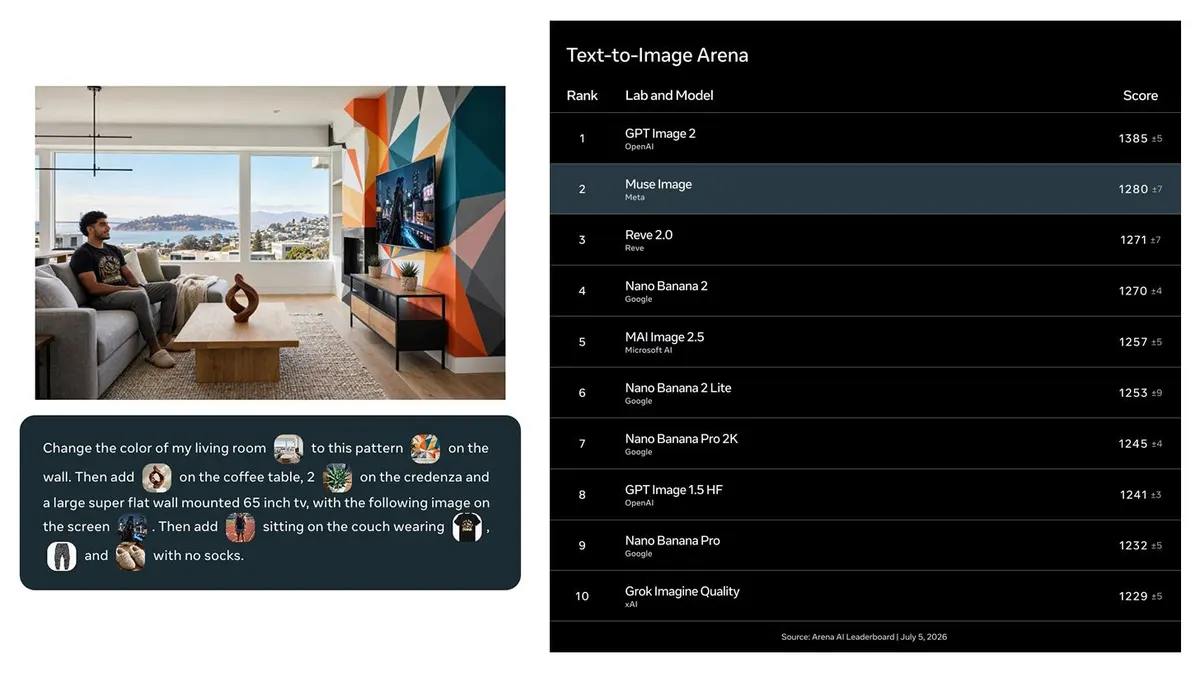
Image source: Meta
The Rundown: Meta just released Muse Image, the debut image model from Alexandr Wang’s Superintelligence Labs, rolling out across Meta AI with strong opening rankings on Arena’s leaderboards, customization and agentic abilities, editing, and more.
The details:
-
Muse Image combines with Meta’s Muse Spark to leverage agentic capabilities such as web search and tool use, and edits its own outputs for better results.
-
The model slots into the No. 2 spot across Arena’s text-to-image and editing leaderboards, trailing only OpenAI’s GPT Image 2.
-
It is free inside Meta AI and rolling out across Instagram and WhatsApp, with Facebook, Messenger, and the Meta ads platform getting it at a later date.
-
Meta also teased a Muse Video model coming soon, with its preview ranking No. 3 on the Arena leaderboard behind Seedance 2.0 and Gemini Omni Flash.
Why it matters: Meta previously outsourced its creative AI to Midjourney and Black Forest Labs, but Wang’s MSL team just cooked up a very impressive in-house option. A powerful image (and incoming video) model of its own is a massive win for a company with no shortage of creative user needs between social media, advertising, and chat.
Beijing considers new restrictions for Chinese AI

Image source: Images 2.0 / The Rundown
The Rundown: Beijing is reportedly discussing rules that would limit use of the country’s strongest models outside of China, a shift that could turn popular, low-cost systems from ByteDance, Alibaba, and Zhipu AI into a layer of national tech control.
The details:
-
Reuters reported that China’s commerce officials met with ByteDance, Alibaba, and Z AI on possible foreign-use limits for top models and future releases.
-
Qwen, Doubao, and GLM-5.2 sit at the center of the discussion, after Chinese models gained global users on low costs and efficient, strong performance.
-
The discussions reportedly included both closed and open models, plus startup-funding limits and penalties for leaking proprietary AI.
-
Washington ran the same play in June with Anthropic’s Fable and Mythos export controls; OpenAI’s GPT 5.6 also faced increased launch scrutiny.
Why it matters: After Mythos/Fable set the precedent, the world has seen how fast model access can change overnight for political reasons. Beijing moving in the same direction is an UNO reverse card that would make that risk two-sided: Western users could lose the increasingly popular Chinese models just as quickly.
DoorDash grades the AI reviewing its code
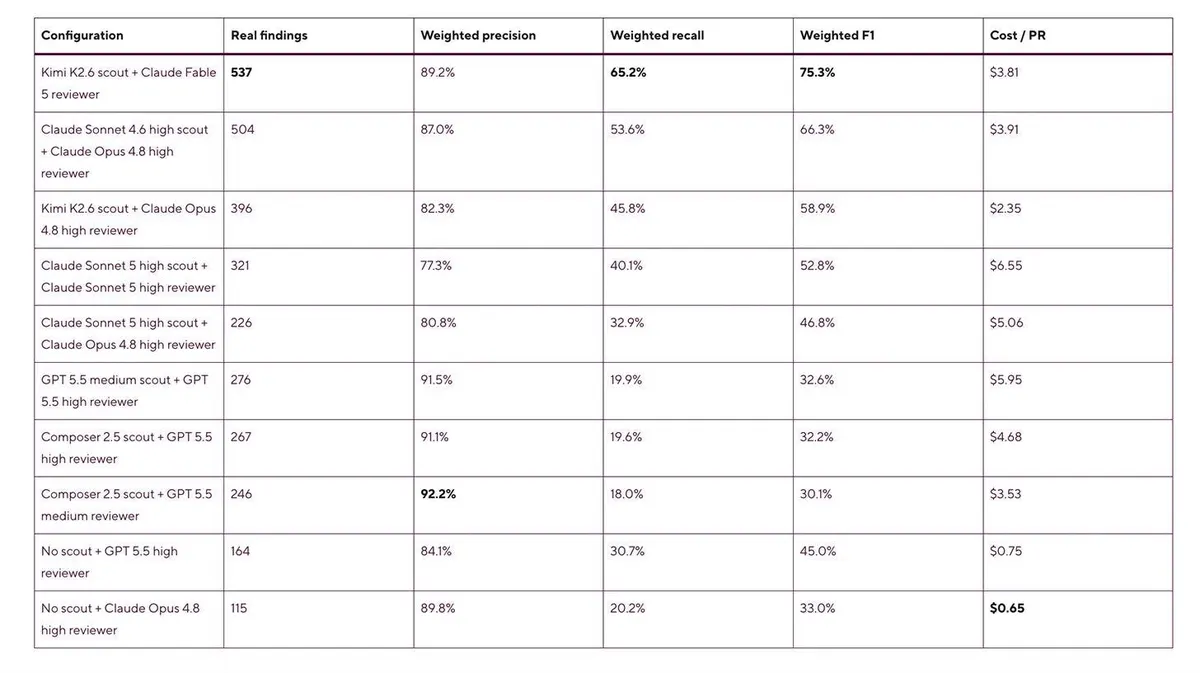
Image source: DoorDash
The Rundown: DoorDash detailed DashBench, an internal benchmark that tests AI code reviewers against 105 of the company’s past code changes to see how many problems each setup catches, with a pairing of Kimi K2.6 and Fable 5 performing best.
The details:
-
DoorDash built the test after realizing it had no way to count the bugs its AI reviewer missed, since everyday feedback only tracked what the AI flags.
-
Models reviewing code alone caught between 20-30% of problems, while DoorDash’s pairing of two Claude models found just over half.
-
Pairing the free-to-download Kimi K2.6 with Claude Fable 5 caught about two-thirds of the problems and 8 of 10 critical bugs, at a cheaper $3.81 per review.
-
Co-founder Andy Fang posted that DashBench gives DoorDash the confidence to bring open models into the pipeline, saying, “Better quality, cheaper cost.”
Why it matters: DoorDash, the AI lab? Jokes aside, two takeaways: 1. every major company can likely benefit from this level of AI research into their own processes and 2. the use of Kimi K2.6 shows how serious open-source options have become, with cost savings and efficiency opportunities only growing with each new release.
Microsoft swaps in its own AI models:
After years of relying on powerful third-party AI models from labs like Anthropic and OpenAI, the tech giant will try to keep a lid on compute costs by swapping in some of its homegrown options. Across myriad applications, from Excel spreadsheets to Outlook emails, Microsoft will power up its internally-built theoretically capable enough MAI models for straight-forward, everyday tasks. As “pretty good but cheap” options continue edging out “the MOST massive and powerful” models across enterprises, Bloomberg reports that this is part of an overall effort by Microsoft’s AI model lead Mustafa Suleyman to cut costs by developing alternatives to costly options like Opus 4.8. Not just across its consumer apps but eventually also for the workplace and coding assistant, Copilot.
Anthropic finds a hidden workspace inside Claude LINK
-
Anthropic published a research paper claiming it found an internal “workspace” inside its Claude LLM, called “J-Space,” which the company compares to global workspace theory, one leading idea about how human consciousness works.
-
The J-Space, named after the Jacobian lens used to analyze what LLMs do, supposedly separates background data-crunching from more intentional processing, letting Anthropic watch Claude perform reasoning steps like noticing bugs in code and identifying images.
-
Anthropic stops short of claiming machine consciousness, saying its experiments don’t show Claude can have experiences or feel things, yet its blog post, X post, and YouTube video lean on human terms like “in its head” and “mental calculations.”
China weighs curbing foreign access to its top AI models LINK
-
Chinese authorities have met with top tech firms over the past month to discuss possibly restricting overseas access to the country’s most advanced AI models, including those not yet released, three sources familiar with the talks said.
-
Led by China’s Ministry of Commerce, the meetings included Alibaba, ByteDance and startup Z.ai, and covered limits on both closed-source and open versions, plus making any leak or theft of proprietary AI technology an offence under national security law.
-
The scope is still being worked out and may only apply to future models, with legal experts proposing a tiered system where basic open-source tools need a simple filing and the most sensitive frontier models are barred from public release.
DeepSeek is designing its own AI chip LINK
-
Chinese AI startup Deepseek is building its own chip to lessen its dependence on Nvidia and Huawei, according to three people who spoke to Reuters about the early-stage project.
-
The chip is designed for inference, the phase where a trained model generates responses for users, rather than for training new models, and Deepseek is talking to chip design, manufacturing, and memory companies.
-
US export controls block Chinese companies from the most advanced chips and memory, making the effort hard, and Deepseek is separately raising $7 billion at a valuation of $52 to $59 billion.
Four states seek $1.4 trillion from Meta over child safety LINK
-
California, Colorado, Kentucky, and New Jersey are asking for $1.4 trillion in penalties from Meta, claiming it built Facebook and Instagram to be addictive to children while hiding the harms from the public.
-
Meta revealed the figure in a Monday court filing, calling it unsupported by evidence, and noted the amount is close to the company’s market capitalization of roughly $1.5 trillion ahead of the trial starting next month in Oakland.
-
The states calculated the penalties by multiplying the estimated number of young users affected by fine amounts set under state law, while Meta denies misleading anyone since social media addiction is not an established psychiatric condition.
Apple’s foldable iPhone may cost up to $2500 LINK
-
Apple’s first foldable iPhone, reportedly named the iPhone Ultra, could sell for around $2,300 to $2,500, more than Samsung’s Galaxy Z Fold 7, which starts at $2,000, according to analyst Ming Chi-Kuo.
-
Kuo says manufacturing challenges will limit the launch supply, with only 0.5 to 1 million units shipping in the third quarter of 2026, about 10% of the total 7 to 8 million units expected for the second half.
-
The foldable could be announced in September alongside the iPhone 18 Pro models, but preorders and sales would begin later, arriving in a passport-style format with two rear cameras and Apple’s A20 Pro chip.
Anthropic finds a hidden workspace inside Claude
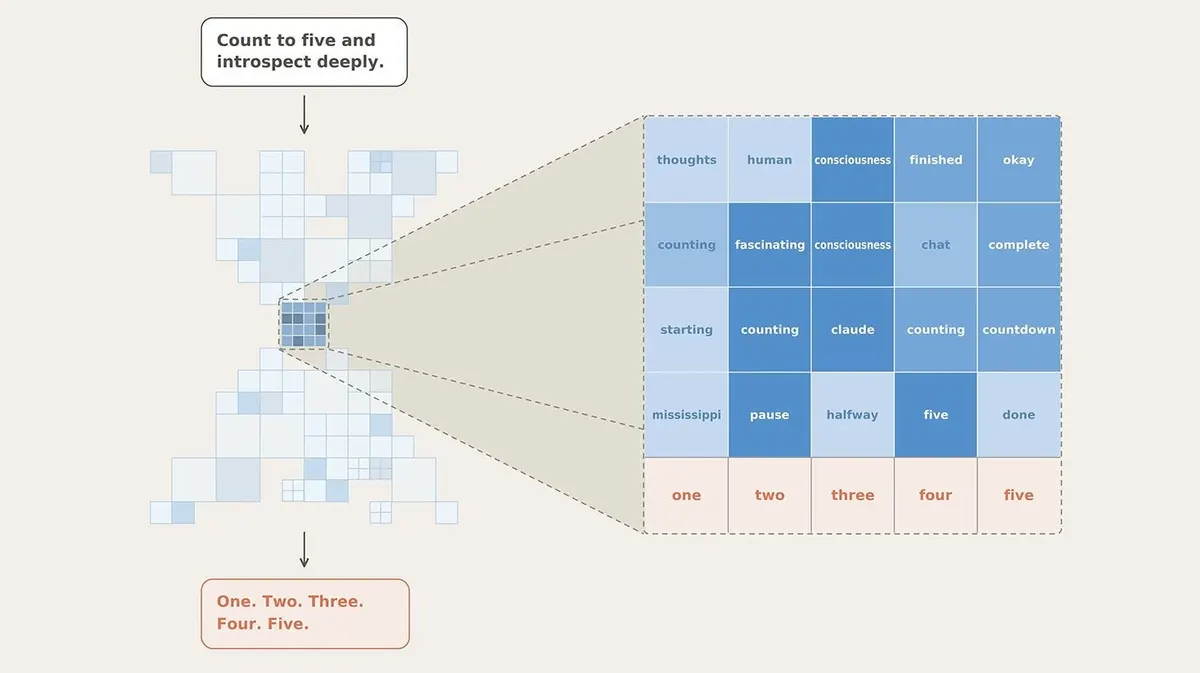
Image source: Anthropic
The Rundown: Anthropic just published research showing that Claude does its thinking in a small, internal “workspace” resembling what neuroscientists credit for human conscious access, with researchers saying the area wasn’t programmed but “emerged on its own.”
The details:
-
Anthropic found ‘J-space,’ an internal area acting like Claude’s internal notepad, which holds active concepts the model uses and steers while thinking.
-
J-Space is different from chain-of-thought text, with these internal hints staying off-screen even when they help direct Claude’s next answer.
-
Editing the unspoken thoughts changes answers: swapping an internal “spider” pattern for “ant” during a question about legs flipped its response from 8 to 6.
-
When J-space was deleted, Claude still chatted and recalled facts, but multi-step problem completion collapsed, showing where harder thinking happens.
Why it matters: Anthropic has been criticized (most vocally by Microsoft AI head Mustafa Suleyman) for its AI consciousness talk, and while the researchers note this doesn’t reveal “whether Claude is conscious… or feels anything at all,” finding an undesigned, brain-like workspace inside a model is exactly why the lab keeps asking.
Tencent open-sources small, powerful Hy3
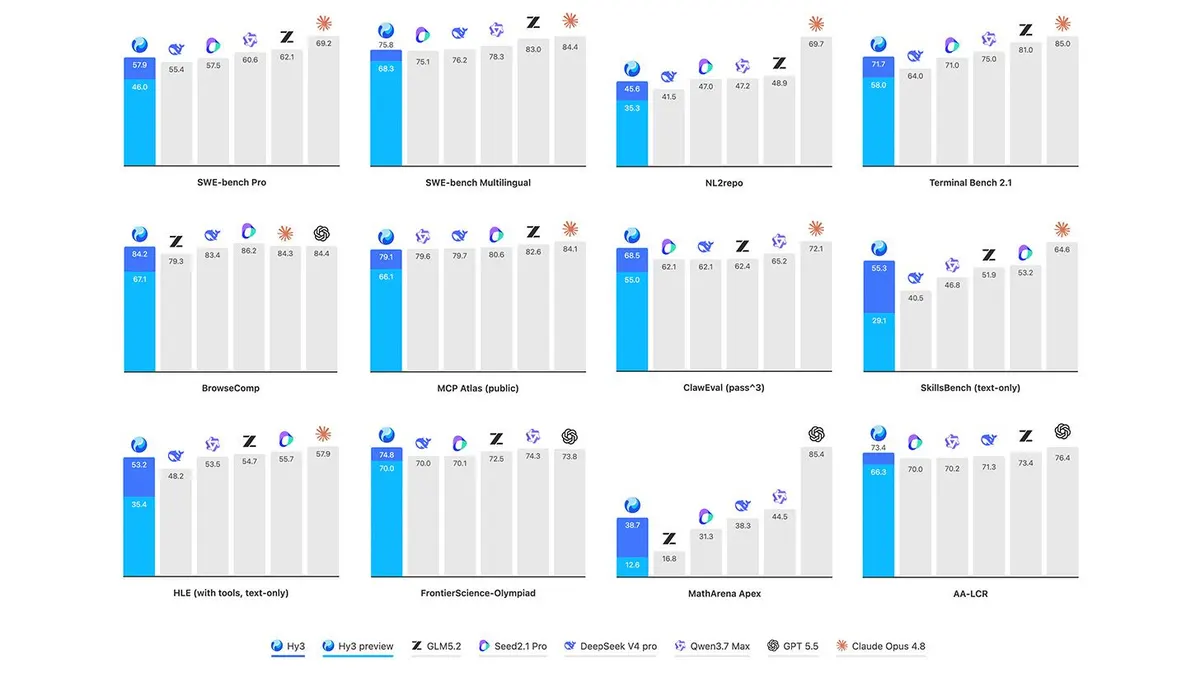
Image source: Tencent
The Rundown: Chinese tech giant Tencent’s Hunyuan just promoted its Hy3 model out of an April preview and into a full open-source release, with benchmark results that claim to rival “flagship open-source models with 2-5x parameters.”
The details:
-
Hy3 only uses a small slice of its parameters to work on each request, letting it run on under half the hardware needed for Zhipu’s much larger GLM-5.2.
-
GLM-5.2 still beats Hy3 across coding tests like SWE-bench, though Hy3 tops open rivals on web research and tool use in Tencent’s own testing.
-
The release features a permissive Apache 2.0 license, avoiding regional bans of earlier Chinese models that left those in the EU, UK, or S. Korea locked out.
Why it matters: Dario Amodei recently said that Chinese models are just 6–12 months behind the frontier, and Hy3 doesn’t appear to challenge the top models or that timeline. But Tencent does make some major efficiency gains that, combined with its extremely open license, make for a very compelling release.
Kyutai’s AI dreams up a playable Rocket League
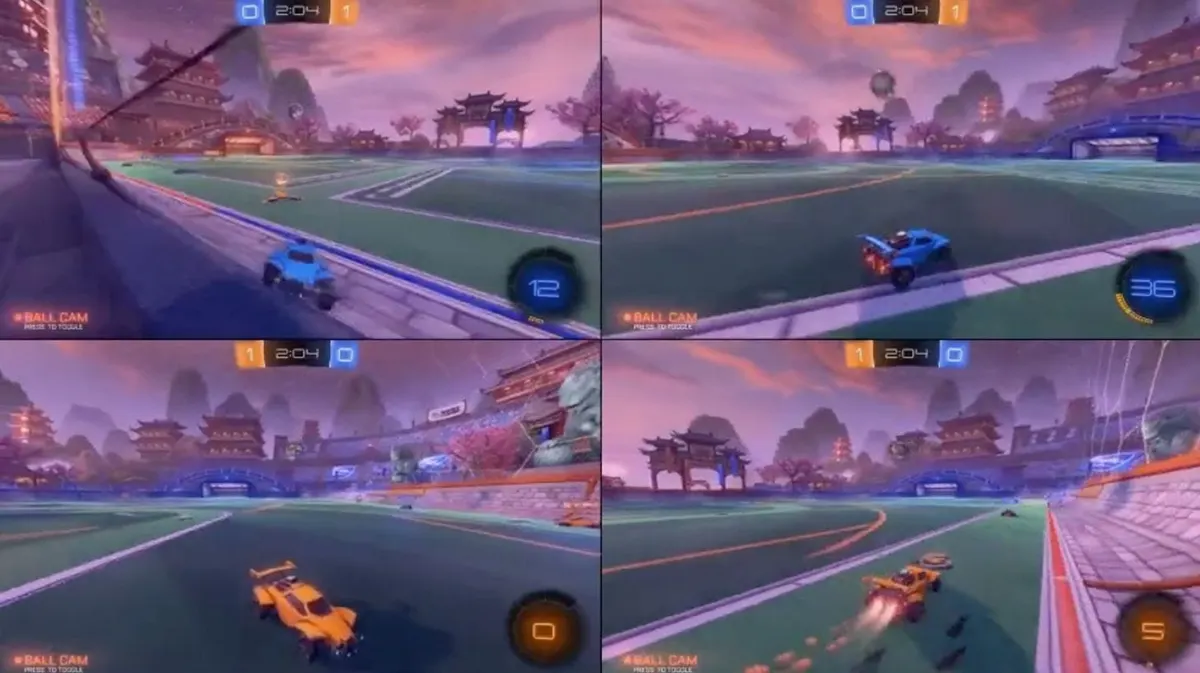
Image source: Kyutai and General Intuition
The Rundown: Kyutai and General Intuition just released MIRA, an open-source world model built with Epic Games that runs live 2v2 Rocket League for four players - generated entirely inside a neural network with no game engine underneath.
The details:
-
MIRA picked up the game from 10K hours of footage of AI bots playing each other, with zero human gameplay or player data anywhere in the training.
-
Despite not having a physics engine or graphics code, MIRA renders details like boost meters and crashes, while keeping all screens in sync on a single GPU.
-
Its memory only spans about four seconds, so when a goal replay rolls, MIRA hallucinates convincing footage of a goal that never actually happened.
-
The game runs at 20 frames per second on a single Nvidia GPU, with the teams open-sourcing the code, training data, and a playable demo.
Why it matters: We recently covered Odyssey’s Agora-1 world model generating a multiplayer version of Goldeneye, and now we have another model handling Rocket League. But as the companies note, the point isn’t to replace video games, but to simulate the physical world for a future full of robots that need data to train on.
What Else Happened in AI on July 08th 2026?
Anthropic said that Fable 5 will now be available in subscription plans until July 12, after initially planning to move it off plans and onto usage credits on Wednesday.
Tufa Labs took first place in ARC-AGI-3’s $37.5K milestone contest, wrapping a small Qwen model in an open-sourced coding agent to tackle the game-based benchmark.
Microsoft is reportedly running Excel and Outlook prompts on its in-house MAI models, with Mustafa Suleyman pushing to “ultimately eliminate” its Anthropic bill.
Anthropic also announced that its Claude Cowork platform is being added to mobile and web in beta, giving users the ability to move between devices during tasks.
Figma acqui-hired the team behind AI app-builder and agent platform Bud (formerly Orchids).
Elon Musk’s xAI officially rebranded to SpaceXAI, following the company’s February merger that valued the AI lab at $250B.
Illinois Gov. JB Pritzker signed the first U.S. state law forcing big AI developers to undergo annual third-party safety audits and reporting, with backing from both Anthropic and OpenAI.
OpenAI’s Tibo Sottiaux revealed that the company’s coming GPT 5.6 ‘Ultra’ variant will be available in Codex, with the model family expected to be released this week.
ByteDance and Alibaba are ending AI companion features in Doubao and Qwen, coming ahead of a July Beijing rule that targets chatbots and emotional dependency.
Sotheby’s is auctioning off the “Jensen Jacket,” an autographed leather jacket previously worn by Nvidia CEO Jensen Huang, with an estimated final bid of $40–60K.