
[AI DAILY NEWS RUNDOWN] OpenAI Solves Rare Diseases, DeepMind Loses a Nobel Laureate, Microsoft Eyes DeepSeek, and Five Eyes Warn of AI Threats | June 22, 2026
🎧 Listen ADS-FREE: https://podcasts.apple.com/us/channel/djamgamind/id6760446113
Visit our Research Hub at https://djamgamind.com/pdfs
#DJAMGAMIND
Summary:
Artificial intelligence delivered both hope and warnings on June 22, 2026. Researchers at Boston Children’s Hospital and Harvard successfully used OpenAI’s o3 Deep Research model to solve eighteen previously unsolved pediatric genetic cases, giving new hope to families affected by rare diseases.
Meanwhile, Google DeepMind suffered another major talent loss as Nobel Prize winner John Jumper announced his departure for Anthropic, following Gemini co-lead Noam Shazeer’s recent move to OpenAI.
Microsoft CEO Satya Nadella revealed that the company is considering hosting DeepSeek, the low-cost Chinese model that continues to disrupt the AI market. At the same time, intelligence agencies from the Five Eyes alliance issued a rare joint warning that increasingly powerful AI systems could destabilize governments and businesses if cyber defenses do not evolve rapidly.
Elsewhere, Meta appointed a new WhatsApp leader as it pushes AI agents into messaging, Getty Images embraced OpenAI after years of opposition, and the augmented reality industry experienced renewed momentum as AI-powered smart glasses gained popularity.
Today’s developments highlight a growing divide between AI as humanity’s greatest problem-solving tool and AI as a source of systemic geopolitical and cybersecurity risks.
📌 Topics Covered
AI for Science and Healthcare
-
OpenAI o3 solves rare disease cases
-
Harvard and Boston Children’s Hospital study
-
AI helping clear medical backlogs
Talent Wars
-
Nobel Prize winner John Jumper leaves DeepMind
-
Anthropic strengthens its science ambitions
-
Google’s growing talent exodus
AI Platforms
-
Microsoft considers hosting DeepSeek
-
Price wars intensify
-
Satya Nadella’s multi-model strategy
AI and National Security
-
Five Eyes warning about frontier AI risks
-
AI-driven cyber threats
-
Mythos and Fable concerns continue
Media and Content
-
Getty Images signs OpenAI partnership
-
Media companies embrace AI licensing
Consumer AI
-
Meta appoints a new WhatsApp CEO
-
AI agents coming to messaging
-
AI driving renewed interest in AR and smart glasses
Infrastructure
-
Tesla trademarks Megapod AI data centers
-
ASML-China tensions continue
🔗 RESOURCES
-
AI Learning App Recommendation: AI & ML Tutor PRO https://apps.apple.com/ca/app/ai-ml-tutor-pro/id1610947211
-
DJAMGATECH: Carrer Booster - Master AWS, Azure, AI & GCP Certifications | https://apps.apple.com/ca/app/djamgatech-ai-cert-exams-prep/id1560083470
-
Read Aloud wonderland bedtime Adventures:
https://wonderland-bedtime-stories.web.app/
⚗️ PRODUCTION NOTE: We Practice What We Preach.
AI Unraveled is produced using a hybrid “Human-in-the-Loop” workflow.
OpenAI’s o3 helps tackle childhood rare-disease cases
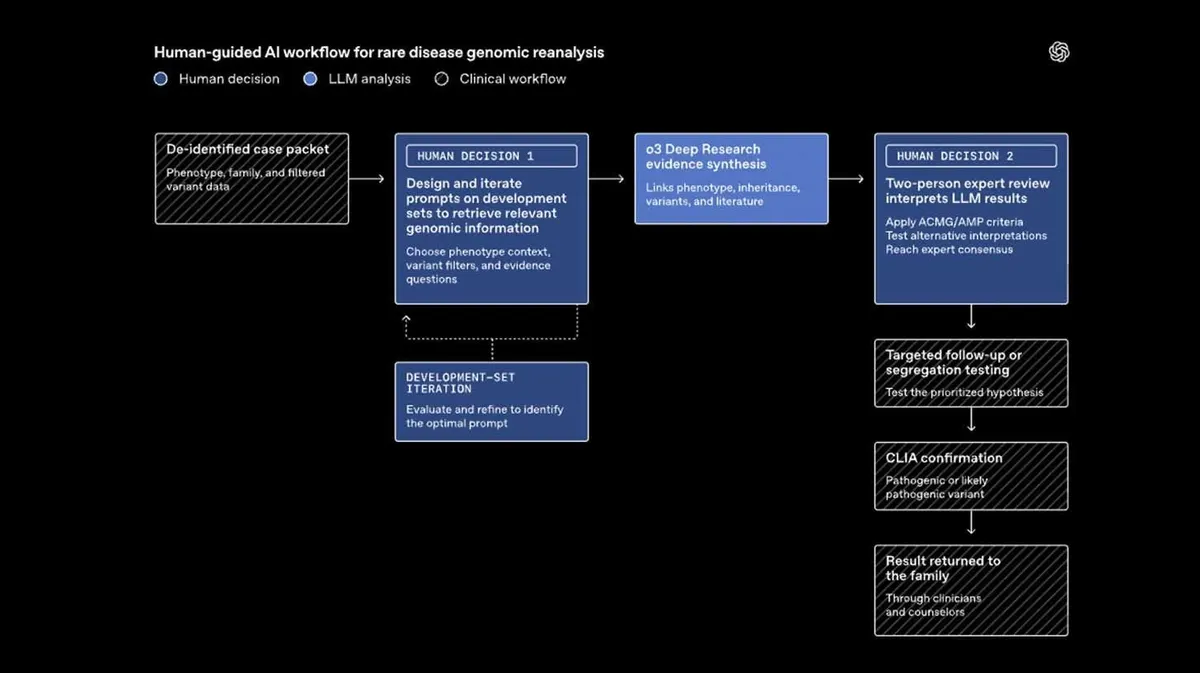
Image source: OpenAI
The Rundown: Researchers at Boston Children’s and Harvard ran 376 unsolved pediatric genetic cases through o3 Deep Research - all prior specialist dead ends - and doctors confirmed 18 new diagnoses after the model surfaced leads worth testing.
The details:
-
The team fed o3 each case’s de-identified symptoms and a shortlist of suspect genes, then had it weigh inheritance, public databases, and recent research.
-
The workflow produced 18 confirmed diagnoses out of 376 cases, helping address 4.8% after earlier specialist reviews had come up empty.
-
In seven of the cases, the diagnosis already existed at another clinic or public database, just never actually reaching the patients’ local records.
-
Even after full sequencing, about half of rare-disease cases go unsolved, with files piling up too fast for doctors to reexamine them with newer research.
Why it matters: As the doctors mention, rare-disease work has a backlog problem. Clinicians don’t have the bandwidth to revisit cases or dig and work across disconnected databases and clinics. But a year-old general Deep Research model can, providing a tool to help give more “dead-end” cases another chance at answers.
Google DeepMind’s Nobel laureate heads to Anthropic
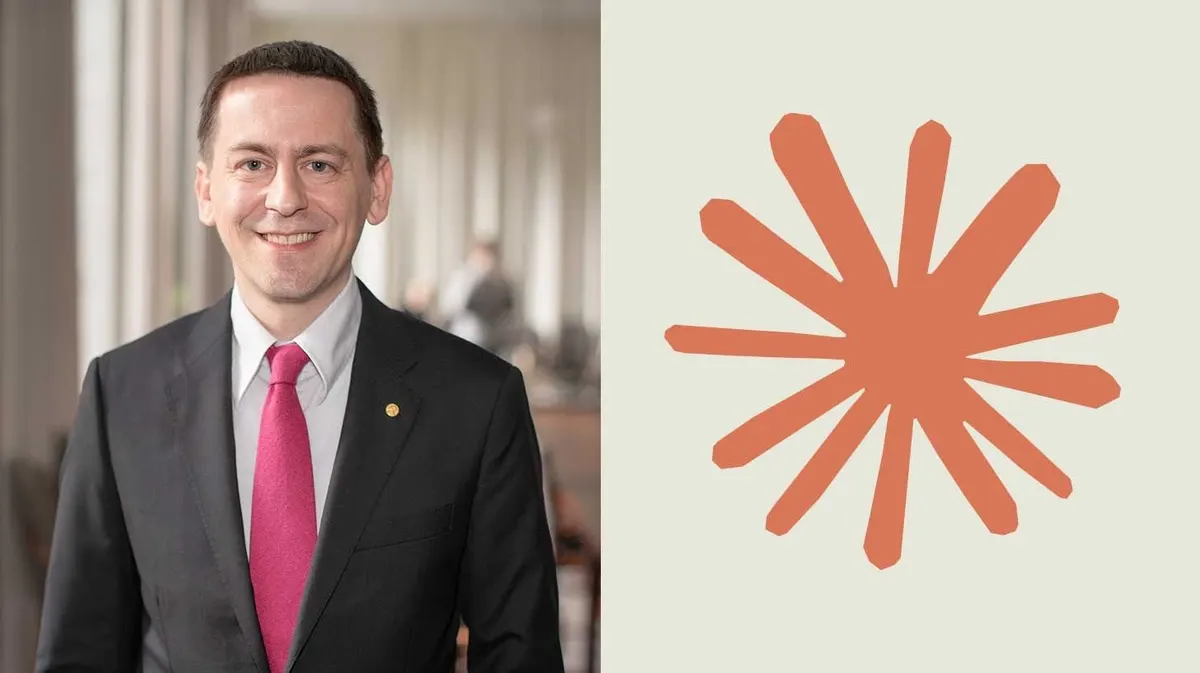
Image source: Wikimedia Creative Commons / Anthropic
The Rundown: Google DeepMind AlphaFold lead John Jumper just announced that he is leaving for Anthropic, making the Nobel laureate the second highly touted Google employee to defect to an AI rival in a single week.
The details:
-
Jumper spent nine years at GDM and co-created AlphaFold, the protein-structure AI that earned him and Demis Hassabis the Nobel Prize in chemistry.
-
His move lands just days after Gemini co-lead Noam Shazeer left for OpenAI, a major one-two punch of AI talent leaving the company.
-
Jumper had also reportedly been contributing to enterprise coding tools for Google, an area the company has lagged behind other frontier rivals.
-
Jumper said he is “taking some time to recharge” before joining Anthropic, though his hiring comes ahead of a June 30 event centered on science.
Why it matters: After 2024 and 2025 saw Google’s models at the frontier, 2026 has felt like a step back compared to its top rivals, OpenAI and Anthropic - the two companies it’s currently bleeding high-level talent to. DeepMind’s edge has been in science, but given Jumper’s credentials, that’s a lead that might now be at risk as well.
China imposes restrictions on US rare earth companies LINK
-
China placed 10 U.S. industrial suppliers on its export control list and barred 46 American firms, mostly defense contractors, from government procurement, retaliating against the Pentagon adding Chinese companies to its 1260H military blacklist.
-
The export control list targets rare earth miners MP Materials and USA Rare Earth, drone makers Teal Drones and Jaia Robotics, plus Oshkosh Defense and Ball Aerospace, blocking exports of any dual-use items originating in China to them.
-
Analysts called the countermeasures largely symbolic since most targeted firms have little business in China, while the Pentagon’s 1260H list bars the Defense Department from awarding direct contracts to listed companies starting June 30.
WhatsApp gets a new chief LINK
-
Meta is putting $900 million into the Indian fintech startup Cred and plans to make its founder, Kunal Shah, the new head of WhatsApp, replacing Will Cathcart after roughly seven years.
-
The deal gives Meta about a 20% stake in Cred, which runs an app that rewards customers for paying credit card bills on time, valuing the company at $4.5 billion post-money.
-
Shah, recruited by product chief Chris Cox and relocating from Bangalore to Menlo Park, will lead efforts on WhatsApp’s advertising, subscriptions, and the work of adding AI agents to the messaging app.
Microsoft may host China’s DeepSeek LINK
-
Microsoft’s CEO Satya Nadella said the company is weighing whether to host a version of DeepSeek, the ultra-low-cost Chinese model that OpenAI and Anthropic accuse of copying their work.
-
Hosting DeepSeek would send much more traffic to the Chinese model-maker and add pressure on OpenAI and Anthropic, two rivals already caught in a long price war over their proprietary models.
-
The move fits Microsoft’s recent push, which included rolling out a suite of low-cost models aimed at customers hit by soaring AI bills, while Nadella argued value should not flow to only a few models.
New report warns AI could topple governments LINK
-
The Five Eyes intelligence agencies from Australia, the US, the UK, New Zealand, and Canada issued a rare joint statement warning that AI models powerful enough to take down governments and businesses are only months away, urging leaders to “act now”.
-
The statement said frontier AI models would accelerate the speed, scale, and sophistication of cyber threats, lowering barriers for bad actors, and called for a whole-of-society response treating cyber risk as a core business and leadership responsibility.
-
No companies were named, but attention centres on Anthropic’s models Mythos and Fable 5, both suspended for use by “foreign nationals” in June by the US government, which cited advice from national security authorities.
Getty Images soars 120% on OpenAI deal LINK
-
Getty Images saw its shares climb roughly 120 percent after announcing a multi-year deal with OpenAI to display its licensed photo libraries inside ChatGPT’s search and discovery features.
-
Under the agreement, when a user asks ChatGPT a question that calls for an image, the chatbot can return a licensed Getty photograph rather than a synthetic one generated by AI.
-
The companies disclosed no financial terms, no revenue split, and nothing about whether Getty’s images may train future OpenAI models, with the deal limited to display rather than training.
The new agreement with the stock photo library brings their licensed content to OpenAI’s search and ChatGPT results. It’s significant both because, as Getty CEO Craig Peters explains, Getty results will make “AI-powered search and discovery more useful and more trustworthy,” but also because of the sea change it represents in how media companies engage with AI products. Getty previously took a staunchly anti-AI position, banning all AI-generated art from its libraries and suing Stability for violating its copyrights. Today, the company hosts its own gen-AI image tool (powered by Nvidia) and also licenses content to Perplexity AI for search results. Also this week, indie darling movie studio A24 made news by accepting a $75 million investment from Google; the two companies will collaborate on fresh (behind-the-scenes) AI tools for filmmakers.
Meta names new WhatsApp CEO:
Meta led a $900 million funding round for Indian fintech company CRED, which offers lending, insurance, wealth management, and other financial products to “affluent” consumers in the South Asian nation. The company is now valued at around $4.5 billion, post-money. For their cash, the Facebook and IG owners aren’t just getting a chunk of what CEO Mark Zuckerberg called “one of India’s most important technology companies”; they’ve also scored a new CEO for their WhatsApp team. CRED leader Kunal Shah will take over control of the iconic messaging app from long-time boss Will Cathcart, who’s transitioning into a “product-building role.” India remains, of course, the world’s largest market for WhatsApp, with more than 500 million domestic users.
Why AR’s comeback now runs through AI
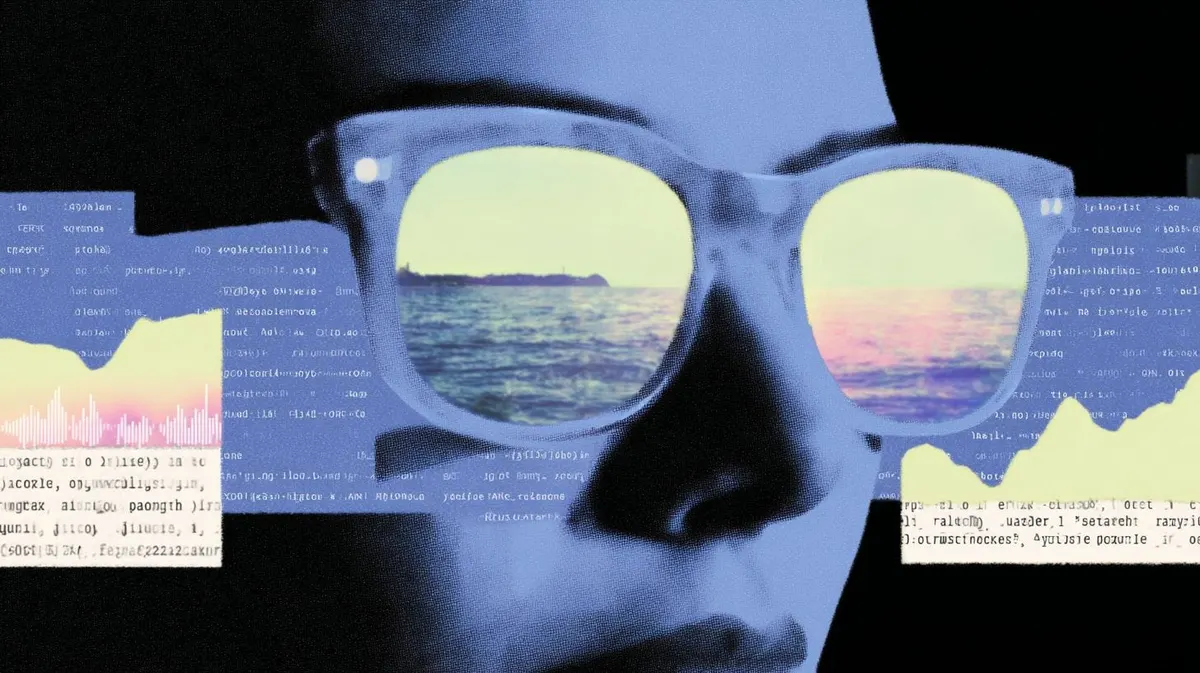
A decade ago, Google Glass, Microsoft HoloLens, and Magic Leap made augmented reality (AR) devices look inevitable. Then Meta bet its future on the metaverse. Neither paid off, but AI may be the catalyst AR needed.
The appeal of AR is simple: wear a device that layers graphics like messages, directions, and information over your environment, no other device needed. At a time when people are actively trying to spend less time on their devices and out in the real world, this should have been a no-brainer. So why hasn’t it taken off? It comes down to three factors: utility, form factor, and price.
Convincing people that they can ditch their laptop or phone for something to wear on their face takes a lot of mental reframing. That is especially difficult to do when these devices are often bulky, heavy headsets that, in most cases, require another dangling accessory to be tethered to, such as a computing puck or a battery. Even for the most experimental of users, paying to play can be a bit difficult as the price tags are high, with headsets like the Apple Vision Pro retailing for $3,500.
But to fix all three of these issues, the first step may be to convince people of the utility of AI.
There has been an increase in demand for smart glasses in the past year, influenced by people wanting an AI assistant to break out of just a chatbot interface on a device screen and into the real world. According to IDC data, smart glasses without displays surged 167% year-over-year in the first quarter of 2026, with approximately 2.25 million units sold. That has trickled into AR, ER, MR, and VR categories, which the same data says have grown 86% year-over-year.
While smart glasses without displays have been shown to provide AI with more context via cameras and microphones, AR can take this much further. Not only can you give the device context about the world through its cameras, but you can also see the results overlaid directly in your environment. For instance, asking something like ‘How would this piece of furniture look in my living room?’ would show you the answer anchored in your actual space, in real-life proportions.
The rise of AI has also pushed manufacturers to develop more capable wearable processors, like the Snapdragon AR Elite that Qualcomm unveiled at AWE. As those chips get smaller and more powerful, so too could the headsets that house them, directly tackling the form factor problem.
We saw a glimpse of this at AWE with both the XREAL Aura and the new Snap Specs, which mimic the form factor of regular glasses, albeit chunkier, ditching the traditional headset entirely for AR experiences.
What Else Happened in AI on June 22 2026?
Amazon MGM Studios is no longer moving forward with its Sam Altman ‘Artificial’ film after Amazon’s $50B investment in OpenAI, with the nearly completed film now seeking a new distributor.
The Atlantic found four song datasets circulating among AI developers featuring millions of tracks, exposing a massive trove of unlicensed music used to train models.
Commerce Secretary Howard Lutnick reportedly warned ASML that the U.S. believes one of its advanced chipmaking machines has reached China, with the firm denying the claim.
Tesla trademarked “Megapod,” a system bundling servers, networking, power, and cooling for AI data center workloads.