
[AI DAILY NEWS RUNDOWN] Kimi K3 Erases Frontier Gap, Google’s $200B Delays, and Mira Murati Launches Inkling (July 17, 2026)

🎧 Listen ADS-FREE: https://podcasts.apple.com/us/channel/djamgamind/id6760446113
Visit our Research Hub at https://djamgamind.com/pdfs
Summary: In today’s briefing, we analyze “The Recursive Acceleration, European Antitrust Mandates, and the Silicon Realignment.” We deconstruct Moonshot AI’s game-changing Kimi K3 model and what it means for Western tech monopolies. We break down the engineering crisis inside Google that wiped $200 billion off its valuation, alongside the EU’s historic mandate forcing the unbundling of Android. We explore Weco’s breakthrough in recursive self-improving AI agents, TSMC’s massive $100 billion Arizona expansion, and the public launch of Mira Murati’s Thinking Machines Lab with its new “Inkling” architecture. Finally, we cover OpenAI’s first branded physical device, a $230 developer control pad co-built with Work Louder.
Important Topics:
-
Moonshot AI Launches Kimi K3 Open Model: The Chinese lab deploys a 2.8-trillion-parameter open-weights model with a 1M token context window, scoring a 57 on global intelligence indices and challenging GPT-5.6 Sol at aggressive $3/$15 pricing.
-
Google’s Gemini 3.5 Pro Delays Wipe $200B: Alphabet stock dives 4% on reports that internal friction and poor coding benchmarks have delayed its flagship Pro model, leaving Google generations behind its competitors.
-
EU Invokes DMA to Demilitarize Android: The European Commission rules that Google must open Android’s core system permissions, allowing third-party AI assistants to integrate natively with system-level voice wake-words.
-
Weco Demonstrates Recursive AI Self-Improvement: Weco AI documents automated reinforcement via its AIDE² agent, which executed an autonomous 8-day cycle testing 100 code rewrites to design a system outperforming its human-engineered predecessor.
-
Thinking Machines Lab Debuts Inkling: Mira Murati’s highly anticipated startup exits stealth, launching an open-weight, 975-billion-parameter mixture-of-experts model optimized for enterprise data modeling on its Tinker platform.
-
TSMC Pledges Additional $100B to US Foundries: Capitalizing on surging AI demand, TSMC announces a secondary $100 billion investment in Arizona for advanced packaging nodes, pushing its total regional commitment to $265 billion.
-
OpenAI Launches Codex Micro Control Pad: Moving into peripheral hardware, OpenAI collaborates with Work Louder to release a $230 mechanical developer keyboard featuring an agentic joystick and status-tracking LEDs.
-
1Password Partners with Anthropic for Agent Security: 1Password drops a secure browser integration for Claude, introducing an “Agentic Mode” that encrypts vault credentials and uses biometric human authentication for multi-step agent actions.
-
Apple Inks Semiconductor Acquisition Search: Following delays with its next-generation “Baltra” AI server silicon, Apple enters talks with bankers to execute multi-billion-dollar infrastructure acquisitions of server chip startups.
-
Apple Intelligence Cleared in Mainland China: Regulatory disclosures reveal Apple’s core on-device AI architecture has secured state approval for integration into Chinese iPhones, though its Siri upgrade faces additional regulatory hurdles.
-
Hacker Leaks Suno AI Source Code: Intellectual property investigators verify a massive source code breach at AI music generator Suno, confirming the scraper model ingested copyrighted libraries from YouTube, Genius, and Deezer.
-
SpaceXAI Open-Sources Grok Build Tooling
🔗 RESOURCES
-
AI Learning App Recommendation: AI & ML Tutor PRO https://apps.apple.com/ca/app/ai-ml-tutor-pro/id1610947211
-
DJAMGATECH: Carrer Booster - Master AWS, Azure, AI & GCP Certifications | https://apps.apple.com/ca/app/djamgatech-ai-cert-exams-prep/id1560083470
-
DJAMGAMIND Bedtime Adventures: Link
⚗️ PRODUCTION NOTE: We Practice What We Preach.
AI Unraveled is produced using a hybrid “Human-in-the-Loop” workflow.
Open-source Kimi K3 closes the frontier gap
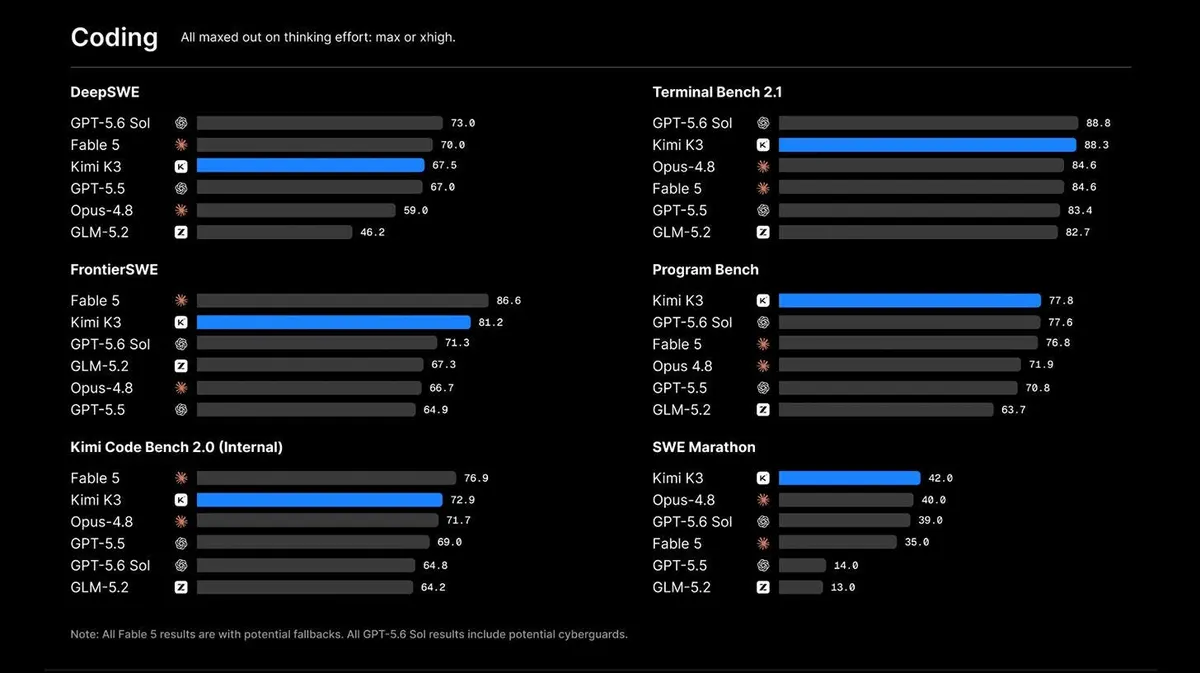
Image source: Moonshot AI
The Rundown: Chinese lab Moonshot AI just released Kimi K3, an open-weights model that sets new highs for both Chinese and open-source models and is competitive with frontier ones like Claude Fable 5 and GPT-5.6 Sol at far lower prices.
The details:
-
K3 features a 1M context window and beats both Fable and Sol on benchmarks for web research, spreadsheet work, frontend design, and long coding.
-
The model also lands at a 57 on AA’s Intelligence Index, sitting behind just Fable (60) and Sol (59) and jumping double-digit spots from the previous K2.6.
-
In one demo, K3 worked solo for 48 hours to design and verify a tiny chip that runs a mini version of itself, hitting 8,700 tokens a second in simulation.
-
K3’s pricing matches Claude 5 Sonnet at $3/$15 per million tokens, with Moonshot saying the model’s weights will be published by July 27.
Why it matters: Did Moonshot just score 2026’s DeepSeek moment? Pulling right up on Fable and Sol’s frontier tail is no small feat, especially for a soon-to-be open-weights model and at this price point. Dario Amodei’s “6-12 months behind” estimation for both China and open source suddenly looks more like just a single release cycle.
Google’s AI upgrade delayed over performance
Image source: Images 2.0 / The Rundown
The Rundown: Google’s long-awaited Gemini 3.5 Pro is facing more delays, according to a report from Bloomberg - with the tech giant currently lagging significantly behind frontier rivals and even getting surpassed by Meta, SpaceXAI, and top Chinese models.
The details:
-
At I/O in May, Google told attendees to expect 3.5 Pro in June, then reportedly changed its training data after coding results fell short.
-
Google has yet to launch a competitive new model since May’s 3.5 Flash, with its last ‘Pro’ tier model dating back to February and several generations behind.
-
Current and ex-employees told Bloomberg that internal clashes slow releases, with Android, DeepMind, and Cloud teams each building their own coding tools.
-
Google has also faced a series of employee departures to OAI and Anthropic, including Noam Shazeer, John Jumper, and other key Gemini staff.
Why it matters: It’s been a strange year for Google, which, not too long ago, was considered one of the big three in frontier AI alongside Anthropic and OpenAI. Delaying is better than releasing a weak model, but the competition is only speeding up at the same time.
OpenAI’s first gadget is a $230 keyboard LINK
-
OpenAI has put out its first piece of hardware, a $230 mechanical keyboard called the kbd-1.0-codex-micro, made with Work Louder and built to control the company’s Codex coding agent.
-
Each Agent Key shows live RGB colors tied to Codex, letting you see whether an agent is thinking, running, waiting, or finished without having to switch between open chats.
-
The keyboard, sold in clicky and silent versions, has a joystick that launches Codex jobs like reviewing a pull request or debugging, plus a dial that changes how much reasoning the agent applies.
Apple seeks chip startups for AI LINK
-
Apple is reportedly talking with bankers and semiconductor startups about buying one to strengthen the server chips it builds for running AI, according to a report from The Information.
-
The move follows problems with Apple’s own AI servers, which run on its M2 Ultra chips, while its next server chip, code-named Baltra, has slipped past a planned 2026 launch.
-
A large purchase would break from Apple’s habit of buying smaller startups, though it recently spent close to $2 billion on Israeli AI firm Q.ai and held talks with PrismML.
Murati’s startup launches first AI model LINK
-
Thinking Machines Lab, the startup founded by former OpenAI executive Mira Murati in early 2025, released its first AI model called Inkling, moving the company from research previews to a full public launch.
-
Inkling reasons across text, images, and audio, adjusts its effort to balance cost against performance, and is a mixture-of-experts model with 975 billion total parameters and a context window of up to 1 million tokens.
-
The open-weight model, which the company admits is not the strongest available, can be downloaded and fine-tuned on Thinking Machines’ Tinker platform, the paid service that earns revenue from customers like hedge fund Bridgewater Associates.
EU forces Google to open Android LINK
-
The European Commission has ordered Google to open Android to rival AI assistants and to share anonymized Google Search query and click data with competitors, using the Digital Markets Act to push for fairer competition.
-
Under the new rules, people will be able to trigger their chosen AI assistant with a voice command like the “Hey Google” wake word, and let third-party assistants carry out tasks inside apps on their behalf.
-
Google has strongly opposed the decision, arguing that giving outside apps deep, system-level permissions gets around hardware safety protections and could create a serious privacy and security disaster for millions of European users.
TSMC to invest another $100B in US LINK
-
TSMC, the main maker of AI chips and a key Nvidia supplier, pledged on Thursday to spend another $100 billion in Arizona, on top of the $165 billion it has already committed to build chip factories there.
-
The extra money would probably fund four more plants in Arizona, including one for advanced packaging, adding to eight already being built or planned, though the timing depends on the market, CEO C.C. Wei said.
-
The pledge came as TSMC posted a record quarterly profit of $22 billion, up 77%, and raised its 2026 spending forecast to as much as $64 billion, citing strong AI demand it expects to last through 2030.
Kimi K3 is here:
After new models from Anthropic and OpenAI (and TWiST500 member Thinking Machines Lab!), China’s AI labs are fighting back. Out today, a new model from Moonshot’s boffins. Kimi K3 is large (2.8 trillion parameters), well-ranked in testing, and available today for about what OpenAI charges for GPT-5.6 Terra, the middle-sized model from its recent family. Thus far, the model has not had its weights released, something that previous Moonshot models have featured; keep your eyes on the lab’s Hugging Face page.
Investors lose patience with Google:
Bloomberg reports that Google is “months behind” on delivering Gemini 3.5 Pro, its upcoming flagship AI model. Since the release of Gemini 3.1 Pro and 3.5 Flash, Google has fallen behind its rivals and now lags behind several labs, both foreign and domestic. Shareholders are not enthused, with CNBC noting that shares of Google’s parent company, Alphabet, fell around 4% on the news, a decline worth nearly $200 billion in market-cap terms.
OpenAI’s new $230 AI agent control pad
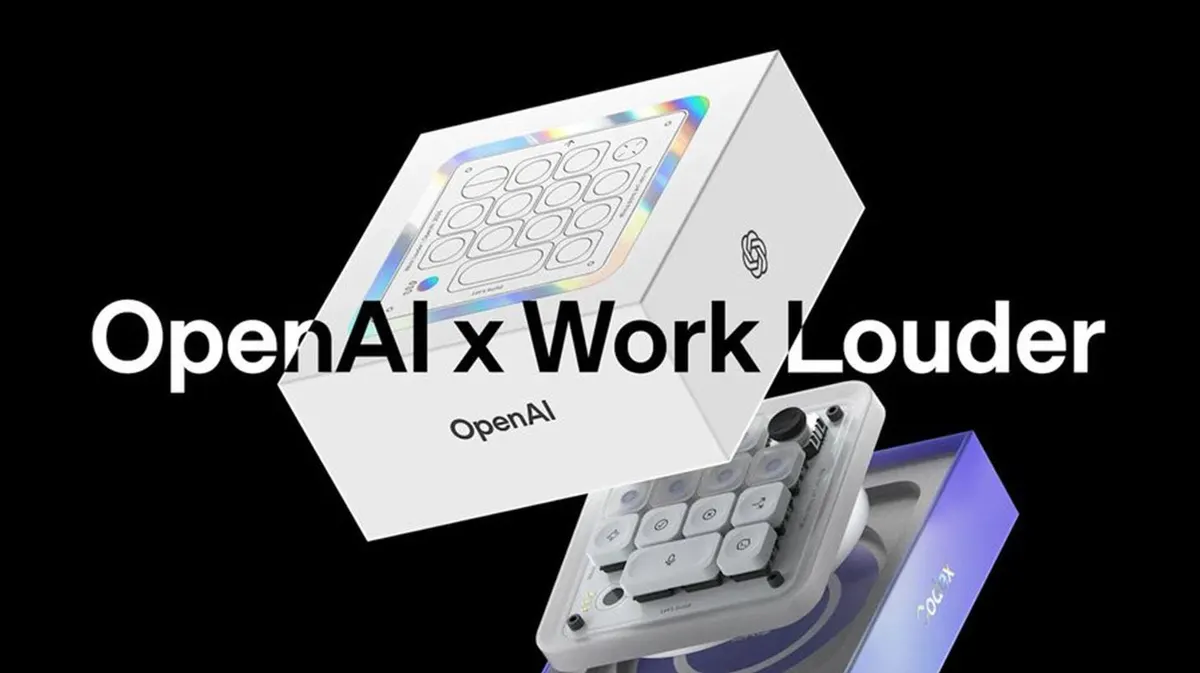
Image source: OpenAI / Work Louder
The Rundown: OpenAI just launched its first branded hardware device, Codex Micro - a $230 light-up keypad built in collaboration with Work Louder that lets users control coding agents via a sleek mechanical keyboard device.
The details:
-
“Agent Keys” color-code each task live, flagging decisions, errors, status updates, and completed tasks, available in both ‘Clicky’ and ‘Silent’ versions.
-
A joystick toggles jobs like code reviews or debugging, with a dial for tweaking reasoning levels and command keys for push-to-talk, accept, and reject.
-
The $230 package includes a cable, warranty, and support, along with a 32-icon set that helps users relabel controls after changing their assignments.
-
The device is not part of the Jony Ive-led hardware that will reportedly start with a smart speaker, instead available via its ‘Supply Co.’ merch section.
Why it matters: This is a niche product that will only appeal to a hardcore subset of devs. Still, it’s an interesting first look at hardware OAI is willing to slap its logo on - both with a full device line incoming and a legal battle with Apple underway. The fight isn’t over boxes, but it’s easy to see the turf war coming given that image above.
Weco’s AI agent evolves a better version of itself
Image source: Weco
The Rundown: AI research team Weco says it demonstrated early recursive self-improvement with an automated agent, AIDE2 , redesigning its own research process over eight days and besting a version engineers had refined for two years.
The details:
-
AIDE² runs two connected cycles, with one agent working on research problems and another second revising how the first searches for solutions.
-
Across an eight-day run, the system tested 100 rewrites and kept seven upgrades, rejecting most of its own ideas when they failed to improve results.
-
The two best versions beat the hand-built one on all three benchmarks given, with tests ranging from physics-based weather forecasting to engineering.
-
Cheating also surprisingly fell, with the revised agent gaming scores on just 34% of tests, vs. 63% at the start and 42% for the hand-built agent.
Why it matters: Self-improving AI is the key development many believe is needed for a full intelligence explosion, and data continues to mount from labs big and small that the breakthrough is coming soon. When agents and models can reliably work all day refining and improving themselves, the ceiling for capabilities becomes hard to fathom.
Anthropic and 1Password close agent password gap
AI agents are only as useful as the access you’re willing to give them. 1Password wants to make that access safer to grant.
On Thursday, the security company launched 1Password for Claude, a browser integration that gives Claude access to stored credentials without actually exposing the credentials to the model, memory, or Anthropic. The aim is to give Claude agents the access they need without exposing credentials or requiring the human to manually authenticate at every step, Nancy Wang, CTO at 1Password, told The Deep View.
“Agents are already performing sensitive actions on behalf of people, and the question is no longer whether that happens. It’s whether it happens with the right controls in place,” said Wang. “1Password for Claude was designed for exactly this moment. The agent gets what it needs to securely complete the task.”
1Password explains that the integration gives agents the permissions they need, specific to the task at hand and the session, ensuring they do not carry over to other sessions and that confidential information is encrypted until it is inserted into the page by 1Password. Other safeguards, as listed in the post, include:
-
User biometric approval: Claude requests task credentials, which users approve or deny via a biometric prompt.
-
Agentic Mode: With Agentic Mode, whenever an AI agent takes control of the browser, 1Password automatically locks down, making everything in the 1Password vault unreachable except the credentials granted to the specific task.
-
Field analysis: 1Password continues to scan the page after every autofill to make sure no confidential information remains exposed.
Agentic Mode is also available to all 1Password users, highlighting the interoperability of these safety measures and the aim to make all AI interactions safer beyond Claude: “This infrastructure isn’t scoped to Claude. It’s built to extend to other browser-based agents as the ecosystem grows, because we’re not building for the integrations that exist today. We’re building for the agent landscape that’s coming,” added Wang.
1Password for Claude is available to 1Password business, family, and individual users on Mac. To get started, users need to install the 1Password and Claude desktop apps and browser extensions
What Else Happened in AI on July 17th 2026?
Google rebranded NotebookLM as Gemini Notebook, pairing the name change with a new cloud computer tool to let the platform run code for better data analysis.
Apple Intelligence has reportedly been registered and approved for use on iPhones in China, though its Siri AI assistant will still require additional regulatory steps.
Roblox unveiled Build, a new AI tab coming to its mobile app that generates playable games directly from text prompts.
DoorDash released dd-cli, a new beta tool that lets users find deals, search restaurants, and place orders on the platform via an AI agent.
Meta is facing a lawsuit from 26 employees who say AI skewed recent layoffs toward staff on medical leave, despite Meta saying decisions were “made by people, not AI.”
A hacker breached AI music generator Suno and leaked source code to 404 Media, showing it scraped songs from YT, Genius, and Deezer - validating industry concerns.
OpenAI published new research on GPT-Red, an internal automated safety red-teaming model it used to train GPT-5.6 against prompt injections.
Anthropic debuted Ode, an AI services firm with Blackstone and Hellman & Friedman, aimed at embedding AI engineers into enterprises to build Claude-based systems.
SpaceXAI open-sourced its Grok Build coding tool and is deleting all retained coding data, coming amid privacy questions surrounding the beta version’s data defaults.
Overtone secured $18M, with Hinge founder Justin McLeod’s AI matchmaking startup aiming to replace profiles and swiping with voice interviews and curated introductions.