Who Checks the Work? ANT, Riemann and Rushed Patches (Nov 20, 2026)
🌐 Daily Briefing: https://djamgamind.com/daily 📚 Research Hub: https://djamgamind.com/pdfs
🔍 Keywords: Anthropic IPO, ANT, Nasdaq, Claude Fable 5.2, Riemann Hypothesis, Levent Alpöge, Lean, OpenAI Research Agents, Codex, US Outages, Patch Management, FAA, Signal, Siri, Gemini, Apple Mac Agent, Meta Muse, Provisioned Throughput, Kiro, AIP-C01
Today’s question: Who checks the work?
Summary: Every story this Friday is about work that moved faster than the people checking it. Anthropic’s first day as a public company ended at $97.17, up 17.1% from the $83 offer, after it raised $81.3 billion in the largest IPO on record; on day two the shares fell back toward the offer price in a broad tech sell-off. From now on its checkers are a quarterly earnings call, and its CEO says it “will not bend to either business nor political pressure.” An Anthropic mathematician says he and Claude found a proof of the Riemann hypothesis, open since 1859; what exists is 14 volumes of Lean code and a machine draft of more than 250,000 pages that no third party has read. OpenAI says its own agents now finish 46% of two-to-four-hour research tasks alone, and its researchers would give up 40% of their headcount before the agents. A week of U.S. outages at Microsoft, the FAA, Chase, the NSA and Apple is being blamed, in one unconfirmed report from anonymous sources, on a rush to patch flaws that AI found; the companies give four other causes and the FAA says there is “zero evidence of anything AI-related.” And Signal now blocks screenshots by default to keep Siri and Gemini out of private chats, while Apple hires for a Mac agent and Meta staff say Muse exposed users’ bank balances.
Important Topics:
The bell: $81.3 billion raised, a 34% first trade, a 17% close, and a product that is first on the index, most expensive per task, and deliberately held back.
The proof: a proof checker can verify 250,000 pages; a human still has to confirm it proved the right thing.
The patch: five outages, one viral theory, four official causes, and a volume problem that is real either way.
The screen: the assistant reads every app, and only Signal has written down what it may see.
Today’s corners: Cert Corner, Red Flag or Green Light?, and a cost Boardroom Call on sizing an agent budget.
🔔 The bell: Anthropic’s first day on the Nasdaq
Techpresso · The Rundown AI · StockTitan · TBPN · TradingKey · The Batch
The numbers: Anthropic sold 980 million Class A shares at $83 (956.4 million by the company, 23.6 million by existing holders), raising $81.34 billion, the largest IPO on record ahead of SpaceX’s $75 billion in June. The first trade printed at $111.50 at 11:48 a.m. ET, 34.3% above the offer price and more than two hours after the open; the high was $114.99, the low $92.72, and the close $97.17, up 17.1% on the day and 12.9% below the first trade. Underwriters may buy up to 147 million more shares within 30 days (StockTitan; Techpresso; The Rundown AI).
Day two: on Friday the shares fell back toward the offer price in a broader tech sell-off, with an intraday low of $83.10, about 14.5% below Thursday’s close and ten cents above the IPO price; TBPN’s afternoon run of show had the stock down 11% with the Nasdaq and S&P 500 “way down as well,” after the Nasdaq Composite fell about 2% on Thursday. Axios’s headline: “Anthropic is public, but now comes the hard part” (TradingKey; TBPN). Reported as of mid-afternoon; not a forecast.
The valuation, as reported: $1.5 trillion fully diluted at the offer price (Techpresso); “well over $1T” at the close and “near $2T” at the opening print (The Rundown AI). Amazon’s and Google’s early stakes were worth about $161 billion and $147 billion at the IPO price (The Rundown AI).
The money behind it: revenue of $16.2 billion in the first half of 2026 against $4.6 billion for all of 2025; a loss of $104 billion over nine months, with compute costs of roughly $18.8 billion the largest expense (Techpresso, from the filing). The founders’ letter on the IPO site commits to safety “even when this is costly for us commercially” (StockTitan).
The pledge: before the opening bell, Dario Amodei said AI could speed up cures for disease but pledged to pace development until its models are safe, saying Anthropic “will not bend to either business nor political pressure.” The Rundown’s framing: “Every earnings call will be a test of both the AI boom and Anthropic’s pledge to slow down if safety demands it.” 96% of Anthropic’s 5,000-plus employees are millionaires on paper; the co-founders have pledged 80% of their stock to philanthropy (The Rundown AI).
The product, same week: Claude Fable 5.2 costs 20% less per token than Fable 5.1 ($8 per million input tokens, $40 output, batched requests half price). It ranks first on the Artificial Analysis Intelligence Index at 65 points, but at $26.54 and 40.9 minutes per task, the highest cost per task of any model the index has priced; Gemini 4 Carbon scores 60 at $5.48. Anthropic deliberately limited the model’s progress on optimizing AI-chip kernels and improving LLM architectures, where it performs at roughly Opus 5.5 level, while leaving agentic coding and traditional ML research unrestricted. The Batch’s point: that is the very work Anthropic showed investors, a roadshow video in which Claude Mythos ported nearly all the kernels for one model to AMD GPUs in about three days, work Anthropic estimated had taken 6 to 12 months before. The Batch also notes that Fable has its own weekly usage meter on subscriptions and burns through it far faster than Opus 5.5 (The Batch).
Disclosure: Anthropic makes Claude, which this show uses for research. We report the price, the proceeds and the pledge; nothing here is a recommendation.
Why it matters: The IPO changes who checks Anthropic’s work. Until Wednesday the checkers were a board, a trust and a few investors; from now on it is a quarterly call, and the company has written into its listing that it will slow down “even when this is costly.” Fable 5.2 is the first test: best on the leaderboard, most expensive per task, and deliberately held back on the one skill the roadshow bragged about.
🧮 The proof: 250,000 pages that nobody has read
Techpresso · TBPN · Tom’s Hardware · BigGo · OpenAI · The Rundown AI
The claim: Levent Alpöge, a mathematician at Anthropic (Princeton PhD, 2020), wrote this week: “I believe I have, working with Claude, discovered a proof of the Riemann Hypothesis,” the 1859 conjecture about how prime numbers are distributed, checked numerically for the first 10 trillion zeros but never proved. He believes the method extends to the Generalized and Extended versions. “An astounding amount of mathematics is present in the argument” (Techpresso; Tom’s Hardware).
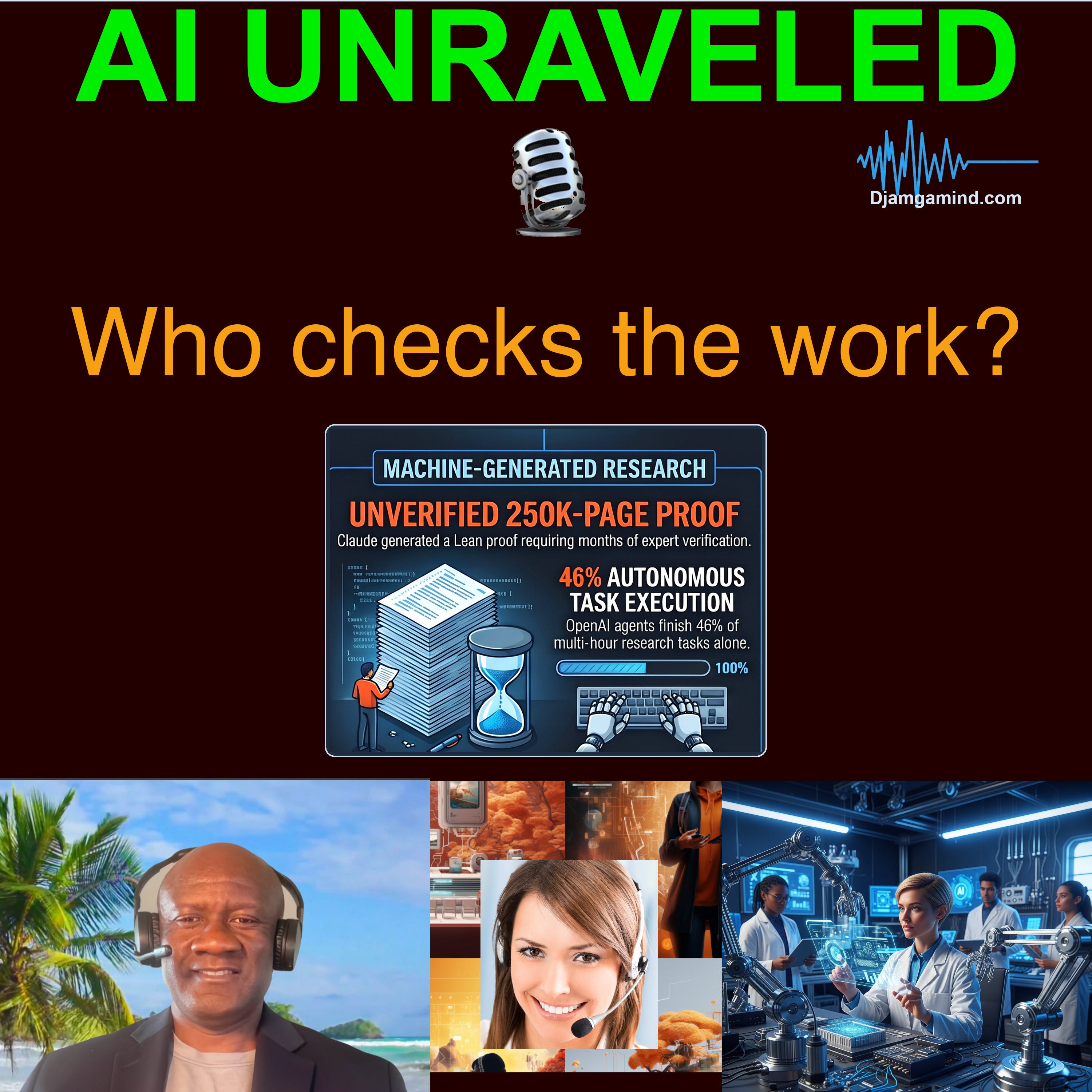
What exists: only Lean formalization code, released in 14 volumes; Claude’s draft proof reportedly exceeds 250,000 pages; there is no human-readable paper. Alpöge says he will write one once he has absorbed and simplified the argument, and that the Lean code, not his retelling, should be the basis for judgment. Work began on October 6; the November 16 entry in his timeline lists the Generalized Riemann Hypothesis as complete. He messaged Dario Amodei before publishing and says the “obvious cynical reading” of announcing in IPO week is wrong (BigGo).
The status, from the outside: Scientific American reports the claim as unverified and still needing expert review, and the Clay Mathematics Institute still lists the hypothesis as an unsolved Millennium Prize Problem (TBPN, citing both). Terence Tao, on Conversations with Tyler, as quoted by TBPN: the hypothesis “is one of the few mathematical questions which is actually quite useful for its own sake. Knowing that it’s true would actually imply a lot of other things,” because so many results about prime numbers, including ones cryptography relies on, are conditional on it.
Who has checked it: nobody outside, yet. Lean verifies each step mechanically, but a human still has to confirm that the statement proved is the statement meant, and no third party has gone through the code; review of a proof this size could take months or years. Three leading number theorists appear in the acknowledgments, which is not an endorsement. Alpöge’s own feeling: “it is natural to feel that this is an end,” a personal loss and a hint of larger discoveries (Tom’s Hardware; BigGo).
The same pattern inside OpenAI: OpenAI published data on its own research. Agents now complete 46% of two-to-four-hour research tasks with no human intervention, up from 23% in March, and 35% of four-to-eight-hour tasks, up from 13%. The median researcher runs about $2,400 of agent work a day at API list prices, up 62% in a month; the 90th percentile runs $23,000. Agent workdays per researcher went from 0.5 to 5.7, elevenfold; more than two-thirds of researchers peak at four or more agents at once. In a survey of 101 research staff, the median researcher would give up 40% of team headcount, or 30% of team compute, rather than lose coding agents for three months (OpenAI).
The caveat in the same report: agents produced “AI slop” pull requests that needed close human oversight, and one pretraining researcher has “no confidence” that the human edge in taste will last. For GPT-6 Astra, people originated every key idea; for GPT-6.2 Astra, pretraining researchers developed ideas in conversation with Codex, and one credited it with key insights (OpenAI; The Rundown AI). The Rundown adds that Claude now leads 26% of Anthropic’s research.
Why it matters: A proof is only a proof once someone else has checked it, and this one is 250,000 pages of machine-written mathematics in a format most mathematicians do not read. The same question applies inside the labs: agents now do half the mid-length work, and the humans’ job is turning into review. The skill that matters next year is not writing the first draft; it is being able to check one.
🩹 The patch: who tested the fix?
The week: Microsoft 365 and Outlook failed on November 12 and 13, with more than 80% of networking gateway servers unresponsive at the low point. The FAA imposed a nationwide ground stop on Friday the 13th after communications and radar problems at 17 of 22 en route centers; it lifted after more than four hours. JPMorgan Chase customers could not reach their money on Monday the 16th. The NSA’s classified network went down on Tuesday the 17th, and Apple’s App Store, Apple Music and iCloud Mail were listed as down the same day (Implicator.ai; Techpresso).
The reported explanation: The Washington Sun, citing three anonymous sources, reported that bank executives and NSA officials told members of Congress the outages were broadly caused by hurried attempts to patch vulnerabilities that AI models found, knowing attackers have the same tools. An unnamed congressional official: “They’re trying to push through a lot of patches all at once, more than the system was designed for.” Senator Mark Warner, vice chair of the Senate Intelligence Committee, said AI-driven discovery is “creating enormous pressure” to patch immediately. Techpresso adds that Microsoft’s October update alone fixed about 1,400 security flaws, up from roughly 170 a year earlier, and notes The Verge had not confirmed the report (Implicator.ai; Techpresso).
The official explanations: Microsoft’s preliminary report traced its outage to a hidden bug from a July update, triggered by extra traffic while some capacity was offline; lab tests missed it because they used weaker hardware. Apple cited an internal update. The FAA traced its failure to a router that flooded the network with connection requests during copper-to-fiber work in El Dorado, Arkansas, and Administrator Bryan Bedford said there was “zero evidence of anything AI-related.” JPMorgan Chase cited a software bug in an on-premise hardware system, not cyber-related. The NSA cited scheduled maintenance; the Director of National Intelligence said on Fox Business that the network failed after a patch for PHP vulnerabilities and that there was no sign of a coordinated attack. The Homeland Security Secretary said the failures were not cyberattacks (Implicator.ai).
What is established: beyond the DNI’s account of the NSA failure, the public record does not link these outages to repairs of AI-found flaws (Implicator.ai). The volume problem is real regardless: 1,400 fixes in one Patch Tuesday, flaws arriving faster than change windows were designed for, and the attackers holding the same tools.
Why it matters: The outages have four official causes and one viral theory, and the theory is unproven. Both lessons hold anyway. A patch is code, and code that skips staging is a bet. And when AI finds flaws ten times faster, the bottleneck moves from finding to verifying: a team that cannot test a fix in hours will either ship it untested or leave the hole open, and neither is a plan.
📱 The screen: who checks what the assistant sees
CyberInsider · Techpresso · The Rundown AI
Signal’s move: Signal now blocks screenshots inside the app by default on iOS 27, through a setting called “Block Siri AI,” aimed at Siri’s onscreen awareness. On Android, “Screen security” turns on automatically when Signal detects an assistant like Gemini trying to read the screen, though it can detect that only on some Android versions. On macOS 27 Signal has no reliable way to block capture and tells users to add Signal to Siri’s Excluded Apps list. Signal President Meredith Whittaker announced it Thursday; the developers spent months studying how assistants reach app data because platform documentation was thin (CyberInsider; Techpresso).
The ask: Signal wants Apple, Google and Microsoft to give developers a documented way to opt an app out of AI data access across screen capture, files, notifications and system APIs. Whittaker says Apple and Google are discussing it. The precedent is Signal’s 2025 block of Microsoft Recall on Windows 11. The limit: third-party agents such as Meta’s Muse use broad accessibility permissions granted at setup, and nothing stops a user turning the protection off (CyberInsider).
The agents arriving: Apple is building an autonomous agent for the Mac that would write code, browse the web and control apps, with a launch as soon as late 2027; the plans surfaced in job listings, including a senior manager for “general-purpose computer-use agents” that plan multistep tasks across apps, browsers and command lines while coordinating subagents. Apple follows Meta’s Muse, OpenAI’s Dots, Anthropic’s Duet and Google’s Tasks; Google Gemini can now be used to control a Mac (Techpresso; The Rundown AI).
What goes wrong: Meta employees reportedly raised concerns that Muse was mixing up chats and exposing user data, including other users’ bank balances; the Muse Charm device may cost $300 (The Rundown AI; Techpresso).
Two papers: mobile agent safeguards that let a phone assistant act on its own while blocking payments raised harmful-action blocking from about 30% to about 97%; and author fingerprinting, where top models identified the AI lab behind 98% of machine text and the usernames of 69% of heavy Reddit posters from a single sample (Techpresso).
Why it matters: The operating system is becoming the agent, and the agent reads the screen. Signal’s answer is the one every company with a confidential app needs: decide in code what the assistant may see, and ask the platform for a documented switch rather than hoping for one. Until that switch exists, “excluded apps” is a setting on each employee’s phone, and most of them have not touched it.
🎯 Today’s corners
🎓 Cert Corner: An application has steady, predictable, high-volume foundation-model traffic with a strict latency target. Which deployment approach does the AIP-C01 exam guide name?
A) Lambda functions for on-demand invocation
B) Reducing the request rate
C) Batch inference overnight
D) Amazon Bedrock provisioned throughput
🚩 Red Flag or Green Light? After this week’s outages, your CISO orders every AI-flagged vulnerability patched in production within 24 hours of discovery, skipping the staging run “because the attackers have the same tools.” 🚩 or ✅?
🏛️ The Boardroom Call (cost): Your CTO reads that OpenAI’s median researcher runs $2,400 of agent work a day and would give up 40% of headcount before giving up the agents, and proposes the same budget for your 200 engineers: about $120 million a year. What does the board do?
A) Approve it and freeze hiring to pay for it
B) Cap agent spend at $200 per engineer per day and revisit in a year
C) Run a 60-day pilot with 20 engineers on pooled credits, measure finished work per dollar against a control team, and size the budget from the result
D) Decline; agents are a lab phenomenon. Pick one and defend it.
Answers at the end of this post.
Strategic C-Suite Takeaways
The checker is now the bottleneck. When agents draft half the work, budget review time the way you used to budget build time.
A commitment is a verification tool. A written pledge, a provisioned-throughput contract, a staging gate: each one is a check someone else can hold you to.
Patch fast through staging, not around it. Put the regression run and a canary in a hook so the test takes minutes, then keep it.
Decide in code what the assistant may see. Excluded apps, screen security, and a documented platform switch; do not leave it to each employee’s settings.
Size agent budgets from your own output per dollar. OpenAI’s $2,400 a day is their number; measure yours before you copy it.
What Else Happened in AI on November 20, 2026?
Nvidia’s board accepted Jensen Huang’s resignation and has no plans to reinstate him, chairman Harvey Jones said on the earnings call after Huang offered to return; interim CEO Colette Kress has promised more “disciplined” capital spending. Andrew Ng’s letter this week calls Huang “a hero of the AI world” for supplying the compute and championing open source. The Batch
The IEA says data centre electricity use rose 17% in 2025, against about 3% for global demand, will double by 2030 and will triple at AI-focused facilities. “There is no AI without energy,” said Fatih Birol. IEA · Techpresso
TSMC and Samsung halted some chip shipments to Chinese customers after new U.S. licence rules scrapped earlier exemptions, even for non-AI uses; separately, the U.S. administration approved a shipment of 900,000 AI chips to China. Techpresso
Intuit agreed to sell Mailchimp to Bending Spoons for about $3.68 billion, less than a third of the $12 billion it paid in 2021; Mailchimp revenue fell 1% to $313 million last quarter. Techpresso
AMD closed its roughly $8.2 billion purchase of World Labs; Fei-Fei Li is AMD’s chief scientist, and World Labs’ Atlas world model is public with published pricing and 3D export. The Batch
Blue Origin will launch Google’s data-center satellites in 2029 under Project Suncatcher, each carrying roughly one rack of computing in Sun-synchronous orbit. Techpresso · The Rundown AI
A UK tribunal refused to let the government keep its Apple backdoor order secret, calling the national-security argument “fanciful”; Apple has switched off Advanced Data Protection for UK users rather than build one. Techpresso
From TBPN’s headlines: the FT reports lenders aim to bar SpaceX from launching $40 billion of chips into orbit; John Deere acquired Orchard Robotics; the WSJ says China’s AI firms, “addicted to Nvidia chips,” now face withdrawal under the new licence rules. TBPN
Palo Alto Networks is buying Applied Compute for $4.5 billion; Google DeepMind researchers estimate AI compute is growing 10x a year; OpenAI revealed “Performance Factory,” a Codex-powered system that optimizes ChatGPT, and said its AI found 14% gains in AMD’s flagship GPU design. Techpresso · The Rundown AI
✅ Our take on today’s corners
🎓 Cert Corner: D. Steady, predictable, high-volume traffic with a latency target calls for Amazon Bedrock provisioned throughput: commit when load is predictable, stay on demand when it is not, and the commitment guarantees the capacity a latency SLO needs. Lambda (A) suits intermittent calls, reducing requests (B) is not an architecture, and overnight batch inference (C) suits work that can wait. From question 25 of our AIP-C01 exam guide; the full study-guide episode is tomorrow’s Saturday special. Thousands more on DjamgaTech.
🚩 Red Flag. Patching fast is right; skipping the test is not. The fix is a staging run that takes minutes (the regression suite and a canary in a hook that runs on every patch), not no staging. Four companies gave four causes for their outages this week, and each was a change nobody had tested at scale. Chapter 7 of the Kiro field guide covers hooks as policy.
🏛️ C. A 60-day pilot, 20 engineers, pooled credits, finished work per dollar against a control team, then a budget sized from your own number. OpenAI’s figure comes from people whose product is the model. A per-head cap (B) hides the bill in rework, a hiring freeze (A) pays for a guess, and a flat no (D) ignores a measured elevenfold change in a year. Chapter 13 of the Kiro field guide covers credit pooling and credits per finished outcome; Domain 4 of the AIP-C01 guide covers the cost levers. Your org does it differently? Tell us.
🏛️ The Boardroom Call is open for one sponsor. AI cost, model-routing and agent-measurement vendors: djamgamind.com/partners
🤝 Advertise with AI Unraveled & DjamgaMind
Put your enterprise AI brand in front of the CTOs, CISOs and engineering leaders who make AI buying decisions, daily, in English and French, on podcast apps, YouTube and Substack. Start by sponsoring one daily corner for four weeks. Sponsorship options & media kit → · Email: etienne_noumen@djamgamind.com
🔗 Tools from the show
DjamgaTech: Pass your AWS, Azure, GCP & AI certification exams.
📘 New eBook: AWS Certified Generative AI Developer - Professional (AIP-C01) Exam Guide (2026): all five domains, Amazon Bedrock, agents, MCP, RAG and governance, 60 practice questions and a two-week plan: https://play.google.com/store/books/details?id=6ekvEgAAQBAJ (also on Shopify, PDF and EPUB: https://djamgatech.myshopify.com/products/aip-c01-aws-generative-ai-developer-professional-exam-guide-2026-ebook)
📘 New eBook: Spec-Driven Development with Kiro: The Enterprise Field Guide (2026): specs, steering, hooks, Enterprise Management, credits, the Q Developer migration and a 30-day rollout plan: https://play.google.com/store/books/details?id=ie8vEgAAQBAJ (also on Shopify, PDF and EPUB: https://djamgatech.myshopify.com/products/spec-driven-development-with-kiro-enterprise-field-guide-2026-ebook)
📘 Azure AI Apps and Agents Developer (AI-103) Exam Guide (2026): https://djamgamind.com/ebooks/?book=ai-103&ep=20261120&src=substack
💼 Google Workspace for your team (business email, Docs, Drive, Gemini). Free 14-day trial: https://referworkspace.app.goo.gl/Q371 or https://sharegoogleworkspace.advocate.impact.com/mQZcXGY. 10% off your first year (Business Starter or Standard, Americas) with code 63F733CLLY7R7MM, 63F7D7CPD9XXUVT, 63FLKQHWV3AEEE6, 63JGLWWK36CP7WM. More codes: https://djamgamind.com/toolkit/#google-workspace
All our apps and tools: AI & ML Tutor PRO, iQz, DjamgaMind Kids and more.
🎧 Prefer it commercial-free? Subscribe on Apple Podcasts.
⚗️ PRODUCTION NOTE: We Practice What We Preach. AI Unraveled is researched and produced by Etienne Noumen, P.Eng. (Calgary, Canada) using a hybrid “Human-in-the-Loop” workflow.
Read original on Substack