
[AI DAILY NEWS RUNDOWN] OpenAI's "Catastrophe" Liability Shield, Perplexity's Bank Integration, and the Compute Bottleneck (April 10th 2026)
🎧 Listen Ads-Free at Djamgamind.com or
Summary: The week closes with a stark look at corporate liability and aggressive vertical integration. We perform a forensic analysis of the “Artificial Intelligence Safety Act” in Illinois, an OpenAI-backed bill seeking to shield developers from lawsuits related to catastrophic AI failures (defined as 100+ deaths or $1B+ in damage). We then pivot to enterprise strategy, deconstructing how ChatGPT’s new Upwork integration and Perplexity’s Plaid banking integration signal the death of the standalone app and the rise of the “Agentic OS.” Finally, we analyze the structural bottlenecks of the AI economy: Amazon’s defense of a $200B CapEx spend, Anthropic’s potential move into custom silicon, and the fierce debate over whether energy or logic chips will ultimately cap global AI growth.
Important Topics Covered:
-
The “Catastrophic Harm” Shield: OpenAI backs Illinois legislation to limit developer liability for massive AI disasters, highlighting the multi-million dollar lobbying push by frontier labs.
-
The Agentic OS: ChatGPT integrates Upwork to handle end-to-end corporate hiring, while Perplexity’s ‘Computer’ agent connects to Plaid to autonomously manage personal and corporate finance.
-
The Compute Bottleneck Debate: Deconstructing the Dwarkesh Patel/Dylan Patel conversation on whether energy generation or centralized logic/memory production will throttle AI scaling.
-
Amazon’s CapEx Receipts: Andy Jassy reveals AWS AI is at a $15B run rate, justifying the $200B spend and floating the external sale of Trainium chips.
-
Anthropic Custom Silicon: Reuters reports Anthropic is exploring building its own AI chips to reduce reliance on Nvidia and Amazon.
-
OpenAI’s $100 Pro Tier: Launching a new subscription tier explicitly designed to combat Anthropic’s pricing and cater to heavy agentic coding workflows.
Keywords: Artificial Intelligence Safety Act Illinois, OpenAI catastrophic harm liability, ChatGPT Upwork integration, Perplexity Plaid banking integration, Amazon $200B CapEx, AWS AI revenue, Anthropic custom chips, AI energy bottleneck, OpenAI $100 Pro plan, DjamgaMind, AI Executive Toolkit, AI Unraveled.
🛠️ The AI Executive Toolkit: Stop scrolling through generic lists. Get the hand-picked, forensic-vetted implementation stack to bridge the gap between raw innovation and professional-grade governance. Exclusive listener perks on tools like:
-
Chatbase: Build a secure, custom AI chatbot trained exclusively on your firm’s internal data and regulatory documents. (https://link.chatbase.co/etienne-noumen)
-
ElevenLabs: Transform lengthy compliance bulletins into high-fidelity “Audio Intelligence” for your team to consume on the go. (https://try.elevenlabs.io/4z7r3skyymar)
-
Google Workspace: Professionalize your firm’s infrastructure with secure, cloud-based collaboration and branded communication. (https://referworkspace.app.goo.gl/Q371)
⚗️ PRODUCTION NOTE: We Practice What We Preach.
AI Unraveled is produced using a hybrid “Human-in-the-Loop” workflow.
OpenAI wants to shield AI companies from lawsuits
-
OpenAI is backing an Illinois bill called the Artificial Intelligence Safety Act that would protect AI developers from lawsuits over catastrophic harm, as long as they publish safety reports and didn’t act recklessly.
-
The bill covers “critical harms” like 100 or more deaths, $1 billion in property damage, or AI-assisted weapons development, and applies to frontier models built on over $100 million in compute.
-
OpenAI, Meta, Alphabet, and Microsoft spent $50 million on federal lobbying in the first nine months of 2025, while no federal law yet addresses who is responsible if AI causes large-scale disaster.
ChatGPT partners with Upwork on hiring
ChatGPT is adding another application, pushing it toward its goal of making the app an all-in-one hub.
On Thursday, Upwork launched an app for ChatGPT that allows businesses to find the talent they need directly from within the chatbot interface. For instance, a business can describe the project needs and then find and hire fitting talent, drawing from the 18 million professionals on the platform, according to the blog post.
Users can also use the app to get help with creating a job post before they are ready to move on to the Upwork Marketplace to perform tasks such as posting the job, executing compliance, issuing payments, generating contracts and more. Once in the marketplace, users can also access Uma, Upwork’s AI agent, for further help completing the more tedious tasks.
Notably, the blog post places strong emphasis on the ease this will provide users, as they can brainstorm ideas and meet their hiring needs all within ChatGPT. For example, the blog post says, “With teams turning to AI platforms as a primary place to brainstorm and initiate work, they can now find the right expertise and draft a job post in ChatGPT before moving to Upwork’s trusted platform to scope and execute projects, ensure compliance, and facilitate payments.”
Chaya Nayak, head of jobs & certification product at OpenAI, echoed that same sentiment in the post, saying, “For many people, ChatGPT is where you can explore ideas, solve problems, and move work forward.”
Both statements underline the direction ChatGPT is clearly heading: becoming a single, unified hub for all users’ needs. The applications already available through ChatGPT minimize context-switching by letting users do everything from booking trips and building apps to ordering groceries and creating designs, all in one place. That vision is reinforced by the potential launch of a super app that merges the web browser, ChatGPT app, and Codex app into a single, consolidated desktop experience.
Anthropic explores building its own AI chips
-
Anthropic, the company behind Claude, is exploring the possibility of building its own AI chips as the industry faces a growing shortage of the sophisticated hardware needed to train and run new models.
-
The exploration is still early - sources told Reuters that Anthropic has not yet set up a project team or put formal plans in place, though rivals Meta and OpenAI already have custom chip projects underway.
-
Anthropic currently runs Claude on Amazon Trainium, Google TPUs, and Nvidia GPUs, and recently expanded a deal to tap 3.5GW of Google TPU capacity through Broadcom, expected online in 2027.
Google News now prominently features Polymarket
-
Google News has started displaying Polymarket betting pages alongside real news articles, often showing them as large blocks in personalized feeds, search results, and even the home page.
-
Google now lets users select Polymarket as a “source” in its News search bar, a option also available for Reddit and X but not for Kalshi, Polymarket’s main competitor.
-
Critics say prediction markets deal in the language of journalism while peddling irresponsible falsehoods, and scandals like suspected insider trading on the Venezuela bet have drawn national attention.
Google rolls out Gmail end-to-end encryption on mobile
-
Google has made Gmail end-to-end encryption available on Android and iOS devices, letting enterprise users compose and read encrypted emails directly in the mobile app without extra tools.
-
Recipients who don’t have the Gmail app can still read encrypted messages through a web browser, and senders can encrypt emails to any recipient regardless of their email service.
-
The feature requires Enterprise Plus licenses with Assured Controls add-ons and uses client-side encryption, meaning encryption keys stay outside Google’s servers to meet regulatory requirements like HIPAA.
Snap gets closer to releasing new AI glasses
-
Snap is moving closer to releasing its AR glasses, called Spectacles or Specs, after announcing a new partnership with chipmaker Qualcomm to power the wearable device later this year.
-
The glasses will run on Qualcomm’s Snapdragon XR platforms, which are systems-on-a-chip designed for augmented and virtual reality devices, as part of a multi-year strategic agreement.
-
Snap has been developing Spectacles for over a decade, with the last consumer-facing version released in 2019, and earlier this year it spun off a separate company focused on Specs.
OpenAI launches $100 ChatGPT Pro plan
OpenAI has introduced a new $100 per month ChatGPT Pro plan, filling the gap between the $20 Plus tier and the $200 Pro tier that still exists but is no longer listed on its pricing page.
-
The $100 Pro plan offers 5x more Codex coding capacity than Plus, and OpenAI openly says it is designed to compete with Anthropic’s $100 per month Claude option on price and value.
-
OpenAI is temporarily offering even higher Codex limits on the $100 plan through May 31, and none of its plans provide unlimited usage, with the $200 tier giving 20x higher limits than Plus.
Nic Carter lays out his case for why Adam Back isn’t Satoshi.
The TL;DR: Nic thinks Satoshi is dead. From his article:
If Satoshi were alive today, they would have an enormous responsibility to resolve the biggest lingering problem for Bitcoin – the roughly 1.7m BTC sitting naked in “pay to public key” (p2pk) outputs, waiting to be seized by a quantum computer… This could entail the unexpected resurfacing to the market of nine percent of Bitcoin supply thought forever lost. The price impact would be catastrophic.
Recent papers from Caltech and Google suggest that the ability for quantum computing to break Bitcoin may come sooner than expected. About 9% of BTC supply, or $120 billion worth, belong to Satoshi and other wallets that are presumed to be lost. These BTC use outdated p2pk addresses which are uniquely vulnerable to quantum (and their users won’t fork to a quantum-resistant BTC when we get a fix).
“If Satoshi was alive, they would feel an overwhelming sense of duty to resolve the p2pk coins problem, either by rotating their coins to safer addresses, or burning them,” Nic wrote.
Dwarkesh sums up his conversation with Dylan Patel about why energy won’t be the main bottleneck to scaling AI compute.
In the conversation, Dylan is somewhat handwavy about the United States’ ability to harness more energy for AI. From Dwarkesh’s write-up of the discussion:
You can do jet engines bolted to the ground. Ship engines. Diesel recips from auto manufacturers with declining volumes. Fuel cells. Each category alone delivers tens of gigawatts by end of decade. Combined, hundreds… Fundamentally, there’s a lot of different ways to bring power online over the next few years. Building more logic and memory is far more difficult and centralized, so that’s where Dylan thinks the bottleneck will be.
The take proved to be pretty contrarian as far as the discourse was concerned. Jigar Shah, the Director of the U.S. Energy Department under Biden, responded by basically saying Dylan and Dwarkesh don’t understand how the power grid works. A read through the post’s quote tweets provides a really good survey of the different interpretations of which parts of the supply chain are ultimately going to be the biggest constraints on AI - there are a bunch of thoughtful takes to read through.
Andrej Karpathy says he’s seeing a growing gap in the public’s understanding of AI capability.
Everyday users of pro-tier models (e.g. $200/mo) who use them for deep research, writing, search, and advice, have been somewhat ‘left behind’ in Karpathy’s interpretation of things. While the models have continued to get better, they haven’t improved as much in these everyday tasks, so AI progress is simply less obvious to this class of users.
The second group of people Karpathy identifies are those who use frontier agentic models professionally. Andrej writes:
This group of people is subject to the highest amount of “AI Psychosis” because the recent improvements in these domains as of this year have been nothing short of staggering.
Karpathy posits a few straightforward but interesting reasons the models have improved ‘peakily’, with agentic coding advancing the most rapidly: “1) these domains offer explicit reward functions that are verifiable meaning they are easily amenable to reinforcement learning training (e.g. unit tests passed yes or no, in contrast to writing, which is much harder to explicitly judge), but also 2) they are a lot more valuable in b2b settings, meaning that the biggest fraction of the team is focused on improving them.”
Perplexity plugs its AI agent into bank accounts
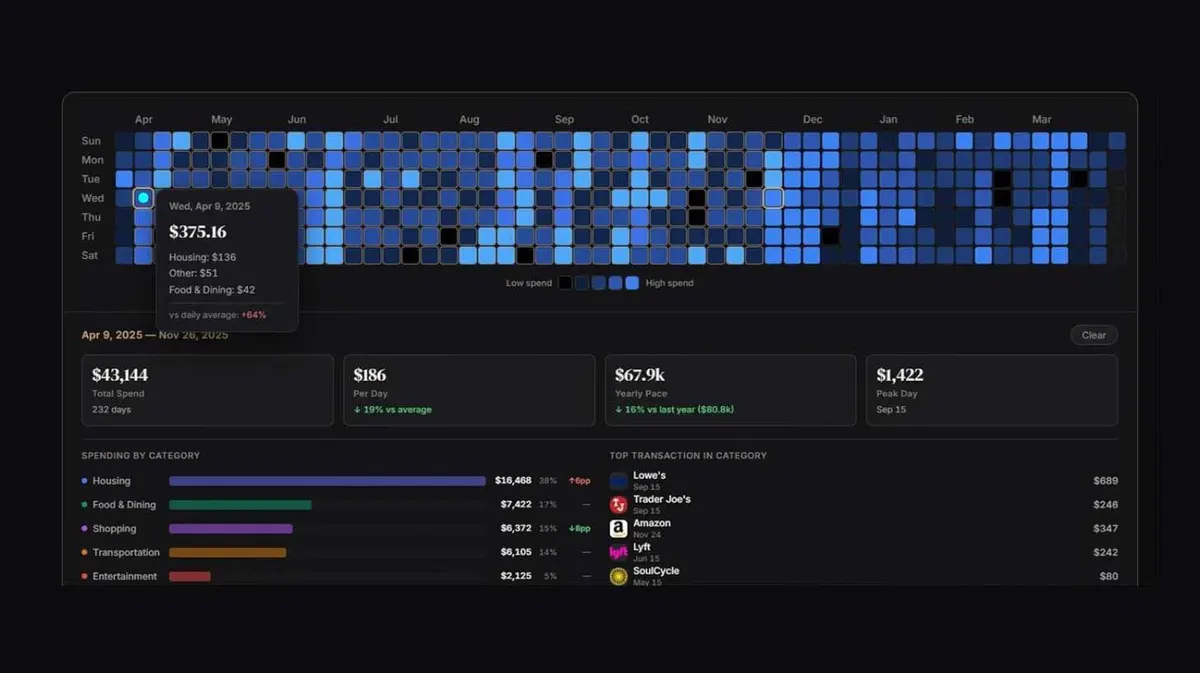
Image source: Perplexity
The Rundown: Perplexity just rolled out a new Plaid integration that lets users connect bank accounts, credit cards, and loans directly to its Computer agent, turning it into a full personal finance hub.
The details:
-
Plaid’s 12K+ bank network feeds into Computer, with users able to pull in checking, credit, loan, and brokerage data for a read-only view of their money.
-
The agentic system can then build customized tools like budgets, net worth trackers, debt payoff plans, and retirement dashboards via simple text prompts.
-
The move comes on the heels of Perplexity’s U.S tax integration that autonomously fills out IRS forms and reviews professional-prepared returns.
-
Perplexity Computer launched in late February, with the agentic pivot helping push Perplexity’s ARR past $450M in March, a 50% jump in a single month.
Why it matters: Perplexity built its name trying to out-Google Google, but it’s Computer has completely changed the trajectory. With smart connectors and a powerful AI agent, the company is suddenly competing with Mint, TurboTax, and every other app area it ends up integrating - not just search.
Jassy’s $200B Amazon AI spend now has receipts
Amazon CEO Andy Jassy shared his annual shareholder letter with the company’s first-ever AI revenue figures and a defense of the $200B planned capex, dismissing bubble talk and floating the idea of selling Trainium chips to outside buyers.
The details:
-
Amazon’s $200B AI spending rattled investors this year, with Jassy’s letter firing back with first-ever revenue figures and locked-in customer demand.
-
AWS’s AI arm crossed $15B in annualized revenue, a number Amazon had never disclosed - and 260x where AWS itself stood at the same point.
-
The custom Trainium, Graviton, and Nitro chips crossed $20B in yearly revenue, and Amazon may sell “racks of them to third parties in the future.”
-
Two unnamed AWS customers asked to buy the company’s entire Graviton chip supply for 2026, with Amazon declining to protect other clients’ access.
Why it matters: If you only tracked models as a barometer for the AI race, Amazon might look like it’s behind - but the $20B chip numbers tell a different story. Nvidia has dominated AI compute, but the supply side of the boom is finally getting real competition at exactly the moment demand has never been higher.
Oxford AI catches heart failure five years early

Image source: Lovart / The Rundown
The Rundown: Researchers at the University of Oxford introduced an AI system that picks up invisible changes in heart fat from routine CT scans, flagging patients at high risk of heart failure up to five years out - with 86% accuracy across 72K patients.
The details:
-
Fat around the heart shifts texture when the muscle beneath is inflamed, with the AI reading the patterns invisible to doctors on any current scan.
-
In the highest-risk bucket, 1 in 4 patients ended up with heart failure within five years - a 20x gap versus those the AI flagged as safe.
-
Oxford is already working with regulators to bring the tool to National Health Service hospitals, and plans to extend it to all chest CT scans within months.
Why it matters: Heart failure’s biggest problem isn’t treatment, it’s timing. Doctors usually can’t act until damage has set in, so an 86%-accurate early warning system built into scans patients are already getting could shift the equation of a serious condition from reaction to prevention for better diagnosis and outcomes.
Gen Z doesn’t want AI, but feels they can’t resist
AI is threatening to upend the way we work, live and think entirely. And the kids are not alright.
A recent Gallup poll of 1,500 people ages 14 to 29 found that excitement around AI is down 14 percentage points from 2025, sitting at 22% of respondents. Respondents reporting feeling hopeful about AI fell nine percentage points to 18%. Anger and anxiety related to the tech, meanwhile, are on the rise, with 31% and 42% of respondents reporting those sentiments, respectively.
Though nearly half of respondents reported feeling curious about the tech, many are concerned about AI’s impact on things like creativity, critical thinking and the job market:
-
Around 48% of respondents reported that the risks of AI in the workforce outweigh the benefits, compared to just 15% who reported feeling the opposite.
-
Confidence in the benefits of AI has also declined, with those who agree that AI will help us work faster down 10 percentage points.
-
Despite the anxiety, people are increasingly viewing AI skills as nonnegotiable: Around 52% of Gen Z students surveyed reported that they will need to know how to leverage AI in postsecondary education, up 5 percentage points from 2025. 48% reported that they believe AI skills will be a necessity in their careers.
These sentiments may match up with broader anxieties about AI in the workforce. Of the 200 readers who responded to The Deep View’s daily poll on AI fueling job loss, 48% said they were concerned that the tech was causing economic displacement.
It only makes sense that people are worried about AI job replacement. With executives under pressure to generate returns, many see cutting payroll as an adequate way to claw back some of their AI investment. A survey of executives from AI agent platform Writer published earlier this week found that 60% of enterprises intend to lay off employees who can’t or won’t use AI.
“There’s going to be an opportunity to AI wash headcount reductions this year,” Chad Seiler, KPMG U.S. Industry Leader for Telecom, Media and Technology, told The Deep View. “The ones that are saying, ‘I’m going to reduce costs,’ that’s a short-term dynamic. It probably isn’t enduring.”
What Else Happened in AI on April 10th 2026?
Spacelift Intelligence just launched, an AI infrastructure suite that helps platform teams ship infra as fast as developers code. Start for free.*
OpenAI has built a model with advanced cybersecurity skills similar to Anthropic’s Mythos, with Axios reporting the company plans to release it to a “small set of partners”.
xAI is undergoing a reorg of its engineering division, with CFO Anthony Armstrong leaving the company as SpaceX execs are installed ahead of the company’s IPO.
OpenAI launched a $100/month Pro tier with 5x more Codex usage than Plus, designed for heavy agentic coding, coming amid anger over Claude usage limits.
Florida’s attorney general opened a probe into OAI with subpoenas incoming, citing allegations that ChatGPT helped plan a campus shooting at Florida State University.
OpenAI Backs Bill That Would Limit Liability for AI-Enabled Mass Deaths or Financial Disasters [LINK]
Japan to ban gene-edited embryos aimed at creating “designer babies” [LINK]
France Launches Government Linux Desktop Plan as Windows Exit Begins [LINK]
“AI is replacing entry-level jobs faster than expected are we ready for a world with no ‘beginner’ roles?” [LINK]
The Information: SpaceX Posted Nearly $5 Billion Loss Last Year from AI Spending
WSJ: A Fiery Re-Entry Awaits the Artemis Astronauts
OpenAI says CEO Sam Altman’s house was targeted with a Molotov cocktail
CoreWeave Announces Multi-Year Agreement With Anthropic
FT: xAI sues Colorado over first state AI anti-discrimination law
WSJ: Meta Banks on AI to Clear the Smoke of Social-Media Lawsuits
OpenAI expects ad revenue to reach $102 billion by 2030
Alibaba’s new video model beats ByteDance’s Seedance
Meta will spend $21 billion on Coreweave, up from $14 billion
Anthropic reportedly considers designing its own chips
Meta is reassigning engineers to its applied AI engineering division