
[AI DAILY NEWS RUNDOWN] G7 Leaders Meet with Altman and Amodei, SpaceX Acquires Cursor for $60B, ChatGPT Loses Majority Share, and Open Models Challenge Frontier AI | June 17, 2026

🎧 Listen ADS-FREE: https://podcasts.apple.com/us/channel/djamgamind/id6760446113
Visit our Research Hub at https://djamgamind.com/pdfs
#DJAMGAMIND
Summary:
Artificial intelligence entered a new geopolitical phase as OpenAI CEO Sam Altman, Anthropic CEO Dario Amodei, and Google DeepMind CEO Demis Hassabis met with world leaders at the G7 Summit in France to discuss global AI standards and a potential alliance among trusted nations. At the same time, tensions around Anthropic’s Fable 5 and Mythos 5 export restrictions intensified, with cybersecurity leaders and researchers calling for the U.S. government to reverse its decision.
Meanwhile, SpaceX officially acquired AI coding startup Cursor in a $60 billion stock deal, creating one of the most powerful AI software ecosystems under Elon Musk’s expanding empire. Chinese lab Z AI released GLM-5.2, bringing open-weight models closer than ever to frontier systems like GPT-5.5 and Claude Opus.
Microsoft CEO Satya Nadella renewed his warning that companies should focus on building proprietary learning loops rather than depending entirely on frontier models, while Microsoft’s Copilot Cowork prepares to support cheaper alternatives like DeepSeek. Meta faced growing employee unrest, OpenAI’s losses ballooned to nearly $39 billion, and ChatGPT lost majority market share for the first time since launch.
Today’s developments suggest that the AI race is no longer about chatbots-it is becoming a battle over ecosystems, agents, sovereignty, and ownership of intelligence itself.
📌 Topics Covered
-
Sam Altman, Dario Amodei and Demis Hassabis meet world leaders at the G7
-
Proposed AI alliance among trusted nations
-
Anthropic’s export restrictions remain controversial
-
More than 100 cybersecurity leaders support Free Fable
-
SpaceX acquires Cursor in a $60 billion stock deal
-
Open-source GLM-5.2 approaches GPT-5.5 and Opus performance
-
Satya Nadella warns against surrendering knowledge to AI providers
-
Microsoft explores DeepSeek for Copilot Cowork
-
OpenAI losses rise to $38.5 billion
-
ChatGPT loses majority market share
-
Meta struggles with morale crisis
-
Apple develops camera-equipped AirPods
-
Snap launches AR glasses
-
AI branding turns off many consumers
-
Meta launches AI Mode for Facebook
Important Topics:
-
OpenAI Abandons Chat for Codex Superapp: Internal product teams confirm an imminent overhaul consolidating ChatGPT into an autonomous agent-and-coding superapp, shifting focus to paid monetization tiers.
-
The AI Boomerang Effect: Industry surveys show 32% of enterprise hiring managers are rehiring for positions previously cut for AI automation, led by finance (44%) and HR (35%) due to severe quality degradation.
-
Apple Rebrands to Siri AI at WWDC 2026: Apple debuts the Golden Gate OS and Siri AI with multi-step reasoning capabilities. Reports expose that the assistant is quietly powered by Google Gemini and Google Cloud infrastructure following an internal executive shakeup.
-
White House Weighs OpenAI Equity Stakes: Financial disclosures reveal active negotiations between the Trump administration and Sam Altman regarding a 1-5% voluntary equity donation to seed an American Public Wealth Fund.
-
Google DeepMind Drops Local Gemma 4 12B: DeepMind launches a multimodal open-weights model capable of processing text, native audio, and local video streams on standard 16GB RAM laptops without an active network connection.
-
Instagram AI Chatbot Security Breach: Meta confirms a critical vulnerability within its “High Touch Support” AI tool allowed malicious actors to hijack 20,225 accounts by exploiting unchecked password reset links.
-
Self-Improving Tax AI Agent Success: OpenAI forward-deployed engineers showcase a Codex-driven autonomous harness for Thrive Holdings, boosting tax document accuracy from 25% to 90% via iterative practitioner correction loops.
-
China Commercializes NEO Invasive Brain Chip: Beijing integrates the Neuracle Technology NEO device into its national insurance system, allowing paralyzed patients to operate soft robotic hardware outside clinical trial environments.
-
The Cognitive Surrender Literacy Threat: Sociological data warns that LLMs are actively masking a deep crisis where 130 million U.S. adults read below a sixth-grade level, creating an invisible drag on workforce productivity.
-
Digital Colonialism Backlash: Academic critics warn that the massive ingestion of Western-centric training data by frontier developers acts as a modern form of cultural colonialism, erasing regional nuances and flattening diverse perspectives.
🔗 RESOURCES
Stop scrolling through generic “Top 10” lists and head over to the AI Executive Toolkit at https://djamgamind.com/toolkit
-
AI Learning App Recommendation: AI & ML Tutor PRO https://apps.apple.com/ca/app/ai-ml-tutor-pro/id1610947211
-
DJAMGATECH: Carrer Booster - Master AWS, Azure, AI & GCP Certifications | Djamgatech App for iPhone, iPad & Mac: https://apps.apple.com/ca/app/djamgatech-ai-cert-exams-prep/id1560083470
-
Read Aloud wonderland bedtime Adventures:
https://wonderland-bedtime-stories.web.app/
⚗️ PRODUCTION NOTE: We Practice What We Preach.
AI Unraveled is produced using a hybrid “Human-in-the-Loop” workflow.
AI leaders meet at G7 summit:
A group including Anthropic CEO Dario Amodei, OpenAI CEO Sam Altman, Google DeepMind’s Demis Hassabis, and several leaders of G7 countries took place on Wednesday, during the big summit in Évian-les-Bains, France. (US leaders in attendance included President Trump, Treasury Secretary Scott Bessent, Commerce Secretary Howard Lutnick, and Secretary of State Marco Rubio.) According to CNBC, Amodei and Hassabis called for a US-led coalition, that would produce a set of rules and standards for global AI development, while encouraging international collaboration. This could include “structured access” to frontier models, and loosened trade restrictions around chips and other critical components, along with a joint effort to stem the risks of cyberattacks, bioterrorism, and other threats. (Notably, China would not be included in this theoretical coalition.) This is, of course, all happening as Anthropic remains deep in negotiations with the US government over the public release of its Fable/Mythos 5 models, which have been blocked by the Commerce Dept. due to national security concerns. The New York Times suggests that many Anthropic employees suspect that their models are being singled out due to a grudge by the Trump administration, or in their own words, that they’re being “bullied based on bad vibes.”
Odyssey enters unicorn territory:
The world model startup raised a $310 million Series B at a $1.45B valuation; Natural Capital led with Amazon, AMD’s venture arm, and others along for the ride. (The Amazon collab goes even deeper; Odyssey committed to using AWS as its preferred cloud provider, and optimizing its models for Amazon’s bespoke Trainium chips.) Unlike LLMs, world models map the physical world and attempt to understand how objects move through it. They’re essential for training and directing the self-driving cars, robots, and other hardware controlled by AI brains, but occupying physical space alongside humans. Speaking of which, Odyssey comes to us from a pair of autonomous vehicle veterans: CEO Oliver Cameron, formerly of the startup Voyage (which was acquired by General Motors), and CTO Jeff Hawke, a former engineer from UK self-driving firm Wayve.
Snap debuts long-awaited AR Specs:
This marks the first take on Snap’s Spectacles line released for public consumption since 2019. Back then, they were still just sunglasses with a 3D/video camera built in. All the releases since the pandemmy have been for developers only. But co-founder Evan Spiegel showed off the new iteration on CNBC this week, designed from the ground up for an augmented reality experience. (In Spiegel’s words, the new Specs introduce “a way to use computing together in shared experiences in the real world, looking up through see-through lenses rather than at an opaque screen.” There are also multiplayer games, a video player offering a 51-degree field of view, and of course the ability to check your email. Spiegel also debuted the somewhat surprising $2,195 price tag, making these feel more akin to the insiders-only Apple Vision Pro headset than an everyday consumer device all your friends are likely to impulse buy. Though many of the internet commentariat were feeling snarky, JCal took a more optimistic view. He argues that Spiegel & Co. are likely just “one or two generations away” from finally making AR glasses that everyday people want to buy.
Snap bets on post-smarphone future LINK
-
Snap is wagering that people are so tired of staring at phone screens that they will pay more than $2,000 for augmented reality glasses called Specs that place digital visuals inside the wearer’s field of view.
-
CEO Evan Spiegel debuted Specs on Tuesday at $2,195 with a $200 refundable deposit, more than 15 times the price of Snap’s $130 camera-only Spectacles from 2016, with shipping expected later this year in the U.S., U.K. and France.
-
Spiegel dismissed audio-only smart glasses from rivals as a phone accessory that does little, but Snap faces well-funded competitors like Meta and Google while it has lost money every year since going public.
US and Europe discuss ‘trusted partner’ AI pact LINK
-
The United States and Europe are talking about a possible AI pact that would give trusted allies priority access to the most capable AI models, an idea set for discussion in Evian-les-Bains, France.
-
US Commerce Secretary Howard Lutnick raised the concept with European diplomats at the G7 summit, just days after Washington blocked Anthropic from selling its Mythos and Fable models abroad over national security concerns.
-
European Commission official Henna Virkkunen urged the US to clarify its reasoning and avoid “discriminatory” measures, while the SIIA, whose members include Apple, Amazon and Google, criticized the restrictions on frontier AI models.
Apple’s next AirPods could have cameras LINK
-
Apple is reportedly working on new AirPods with built-in cameras that would give an upgraded Siri “visual context” about your surroundings, and they are currently on schedule for a late 2027 launch, according to Bloomberg’s Mark Gurman.
-
The earbuds would have cameras mounted in their stems and lights to show when data is being uploaded to the cloud, and they are being tested internally with next year’s iOS 28 update, Gurman says.
-
Apple is said to be planning these camera-equipped AirPods before it eventually releases its first pair of smart glasses, signaling how the company wants to add cameras to its wearable products over the next few years.
‘AI’ branding turns off most US shoppers LINK
-
A new report from WordPress VIP finds that 60% of US consumers say brands using “AI” in their messaging are a turnoff, even as companies push to appear in AI search results.
-
The survey of 2,000 people found 86% don’t fully trust AI and want original sources, while 42% trust AI answers without clear attribution less than airline fees, privacy policies, and medical bills.
-
Despite this wariness, AI referrals are climbing: 60% of enterprise respondents reported more traffic from AI search engines over the past year, and 74% called AI discoverability and attribution a main priority.
SpaceX nabs Cursor in $60B all-stock deal
The Rundown: SpaceX just officially exercised its option to acquire AI coding startup Cursor in a $60B deal paid entirely in stock, coming on the heels of a post-IPO rally that has nearly doubled the company’s value and sent Elon Musk’s personal wealth surging above $1T.
The details:
-
Cursor and SpaceX announced an initial deal in April that provided an option to acquire the startup for $60B or pay $10B for the partnership alone.
-
Since listing Friday at $135 a share, SpaceX has rocketed past $200, piling nearly $1T onto its value in under a week of public trading.
-
Cursor CEO Michael Truell said its upcoming model will be “generally intelligent,” trained from scratch, and as big as Opus.
-
SpaceX said Cursor is already part of a model-training push for Grok Build and its own editor, giving Musk a developer platform for his AI stack.
Why it matters: Cursor was already intertwined with SpaceX from the April deal, but the company’s up-only IPO surge just made a stock-only deal even easier. While Grok hasn’t been up to par on coding, the combination of Cursor’s models and SpaceX’s compute could turn things around at the breakneck speeds Musk likes to move at.
Z AI’s powerful open-weights model nears the frontier
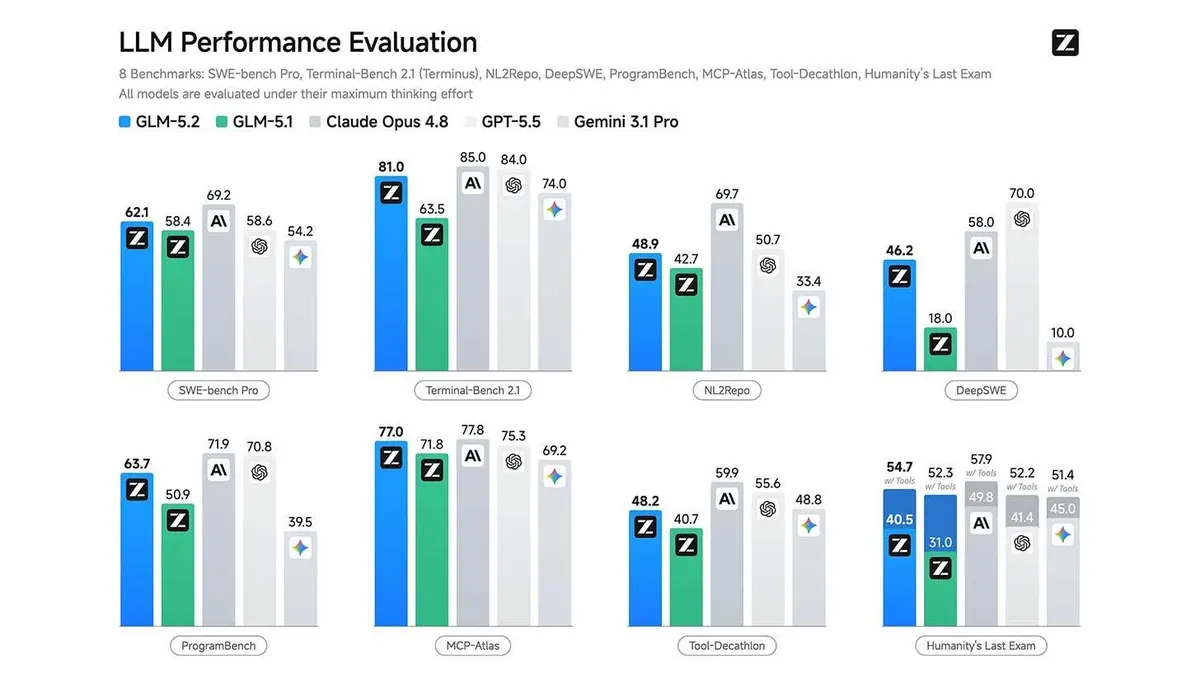
Image source: Z AI
The Rundown: Chinese AI lab Z AI just released GLM-5.2, a new open-weights model that is competitive with GPT 5.5 and Claude Opus 4.8 across a series of coding benchmarks, marking the closest an open model has come to the top closed systems.
The details:
-
5.2 gains a 1M token context window with strong long-horizon task capabilities, along with two effort modes (High, Max) for tougher jobs.
-
Z AI released the model with an MIT license, with its pricing staying the same as its predecessor at a fraction of the cost of frontier options.
-
The model surpasses GPT 5.5 on benchmarks including real-world coding, reasoning, and math, with scores coming in just below Opus 4.8.
Why it matters: This is one of the most impressive open-weights releases yet, and it comes right as two questions press on the AI market: pricing and access. GLM-5.2’s coding performance is strong on its own, but pairing it with free open weights and GLM-5.1-level pricing puts it exactly where the industry is heading.
Meta confronts its AI morale crisis
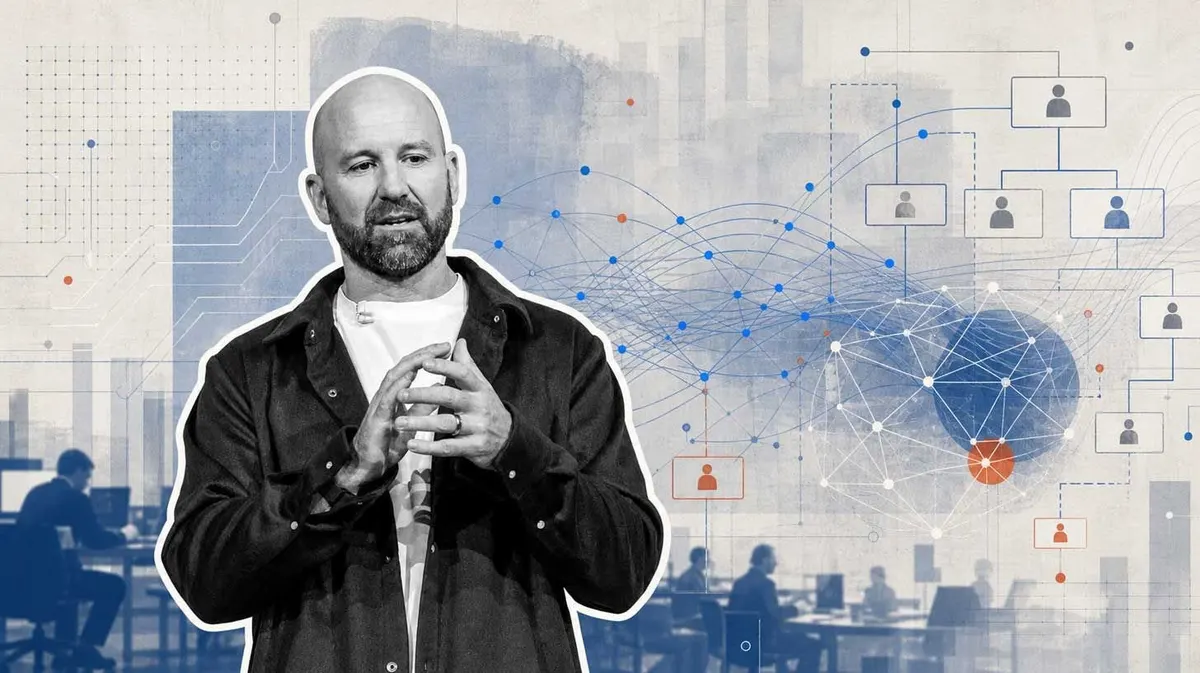
Image source: Images 2.0 / The Rundown
The Rundown: Meta CTO Andrew Bosworth just pledged a culture reset in a memo posted by Wired, promising manager caps, internal job moves, and office perks after reports of forced Applied AI transfers, model-training grunt work, and sinking morale.
The details:
-
Bosworth said Meta “did an atrocious job explaining the vision” of its AI reorg, which forced thousands of employees into work supporting AI models in March.
-
He admitted the rollout damaged trust, promising new manager report caps, less shuffling, social events, and better snack kitchens to boost morale.
-
One worker branded the unit “the gulag,” and anger reportedly spilled out when someone hijacked a company livestream to trash a senior AI executive.
-
The news comes alongside recent internal backlash over the company’s use of mandatory employee computer mouse tracking to collect AI training data.
Why it matters: Meta’s most recent Muse Spark model was a win for the rebuilt AI lab, but under the hood of the broader sprawling tech giant, things don’t sound great for the employees deep in the shuffling. But better “microkitchens” and social events sound like the corporate concessions that only further alienate employees.
OpenAI’s losses just exploded nearly 8X LINK
-
OpenAI’s net loss attributable to the company jumped from $5.09 billion in 2024 to $38.53 billion in 2025, according to audited financial documents independently verified by the Financial Times.
-
In 2025, OpenAI had $13.07 billion in revenue against $34 billion in total costs and expenses, including $19.18 billion on research and development, leaving a $20.92 billion loss from operations.
-
Converting from a non-profit to a for-profit triggered a $41.55 billion loss from changes in fair value, pushing the net loss to $60.35 billion before $21.82 billion was removed via noncontrolling interests.
Facebook’s new AI knows more about you than you think LINK
-
Facebook is rolling out “AI Mode,” a new way to search the platform using Meta AI, which pulls answers from public posts across Facebook, including Groups and Reels, instead of showing a list of results.
-
Rather than scrolling through search results, users can ask a question in plain language and get a synthesized answer based on what people are actively discussing across the platform.
-
Because the AI summarizes content from everyday users instead of vetted sources, there’s a real risk of outdated or misleading information slipping through, a concern already raised about Google’s own AI Mode on Reddit.
Nvidia joins the AI debt boom LINK
-
Nvidia is raising at least $20 billion through bonds, its first such sale since 2021, joining other tech companies that have taken on debt to fund the AI buildout, Bloomberg reports.
-
The chipmaker is offering the bonds in seven tranches with maturities running from two to 30 years, and the longest tranche carries a spread of about 0.9 percentage points above U.S. Treasuries.
-
Nvidia plans to use the money for general corporate purposes, including refinancing existing debt, with JPMorgan Chase, Morgan Stanley, and Goldman Sachs among the banks managing the sale.
Taste Labs puts the timeline in turmoil
Yesterday former Exa AI Labs founding team member Thais Castello Branco introduced her startup Taste Labs, whose mission is to “end AI slop.”
“This requires turning a fuzzy, subjective domain into something we can measure and codify. We’re starting with design,” her post says. More specifically, Taste says they’re working with frontier AI labs to improve their models along taste lines through data labeling, and app layer startups to improve the aesthetics of their products.
Thais’ post immediately went viral, generating a ton of opinions on X and getting over a million views in 24 hours. Peoples’ main complaint is basically that you can’t program taste, but the steelman is that AI aesthetic output can be improved, and that it’s perfectly reasonable for a startup to try to capitalize on that opportunity. - Brandon
Free Fable: Cyber leaders mobilize in open letter
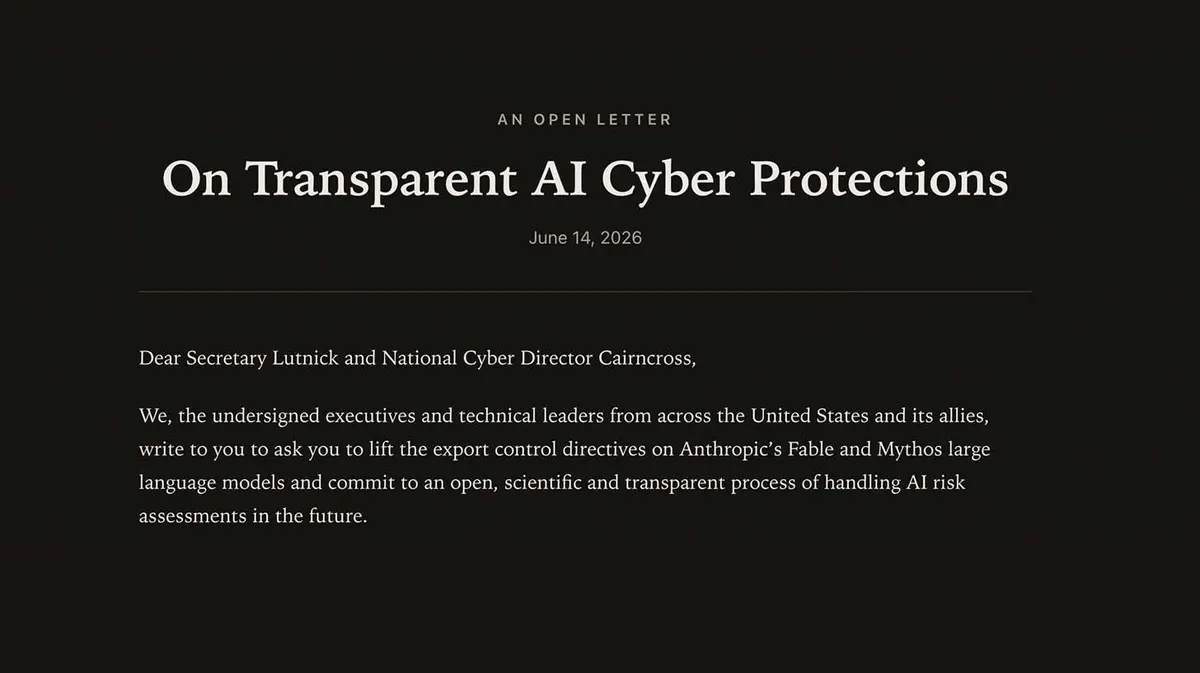
Image source: Free Fable open letter
The Rundown: More than 100+ cybersecurity execs and researchers signed an open letter urging the U.S. to lift its export ban on Anthropic’s Fable 5, arguing it handcuffs defenders without slowing attackers who can pull the same capabilities from rival models.
The details:
-
Ex-Facebook security head Alex Stamos said the flagged jailbreak produced a “proof of concept” of a flaw, which defensive teams use to patch weak spots.
-
The letter singles out OAI’s Daybreak for doing the same flaw-finding, with GPT-5.5, Kimi 2.7, Opus, and Sonnet all having the same capability.
-
The letter calls for model regulation to include grounding in scientific evaluations, a democratic process, and transparent and fair enforcement.
-
Signees include security leaders tied to Adobe, Zoom, Sophos, Vercel, Veracode, Nvidia, and Stanford HAI.
Why it matters: Security researchers don’t agree with the government’s threat assessment that led to the restrictions, which adds to the cloud surrounding the true motivation behind the ban. With other reports citing comms as the main issue between the two sides, the problem is looking just as much ideological as safety related.
Microsoft’s Nadella reframes how companies win with AI
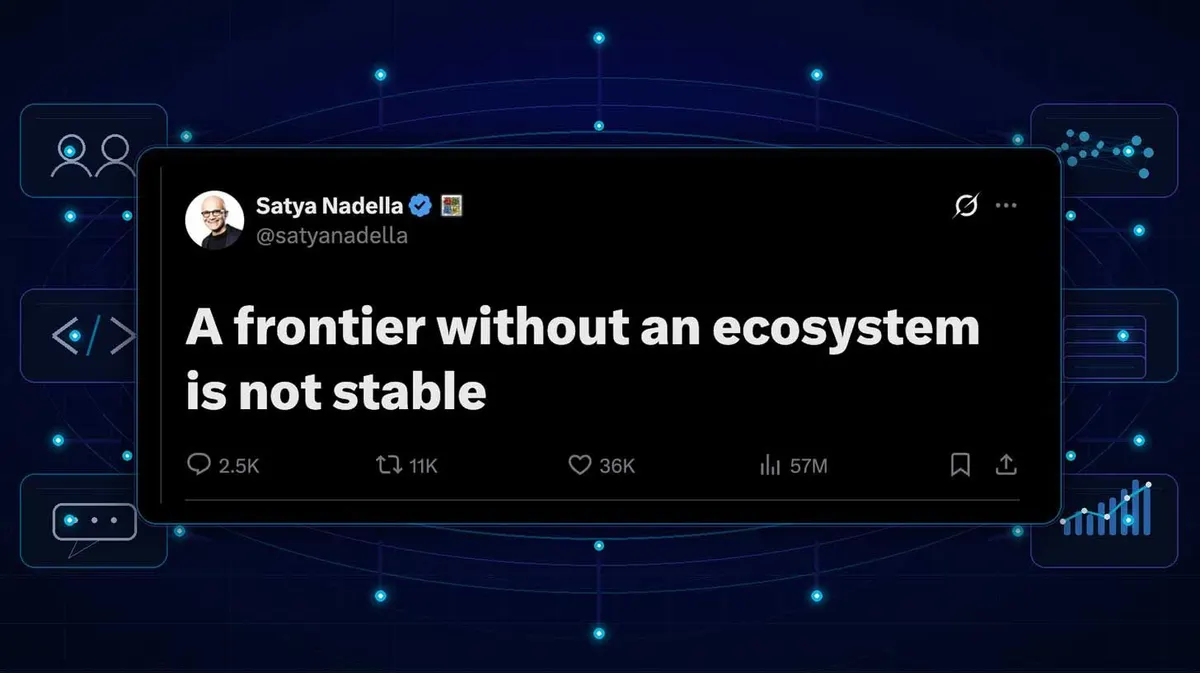
Image source: Satya Nadella (@Satyanadella on X) / Images 2.0 / The Rundown
The Rundown: Microsoft CEO Satya Nadella’s new memo argues a company’s real AI edge comes from a “learning loop” of its own workflows and judgment, not just the best model - and warns an AI economy run by a handful of models would gut whole industries.
The details:
-
His framing splits a company’s value in two: the “human capital” its people supply, and the “token capital” of AI it owns instead of renting.
-
Nadella preached building a “learning loop” system that improves and builds company expertise over time, not just simply picking the top available model.
-
His test of control is to remove one model, drop in a different one, and your “company veteran” know-how stays put, living in the system.
-
Nadella also emphasized avoiding a world where “every company across every sector is ceding value to a few models that eat everything they see.”
Why it matters: Nadella’s stance isn’t new, but it flies in the face of the frontier labs that have already warned industries that the steamroller is coming. But in a world where open, cheaper models can compete on some level with the frontier, a company’s judgment, wired into AI that keeps learning from it, is where the value may live.
Facebook gets new AI Mode, image editing upgrade
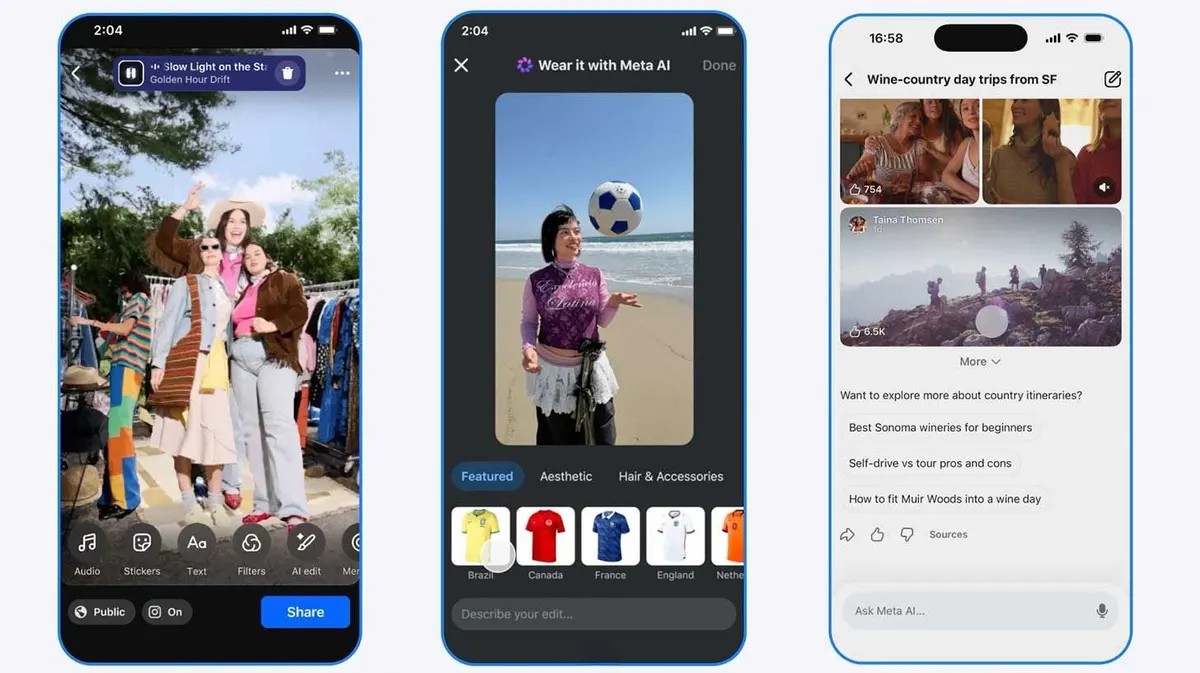
Image source: Meta
The Rundown: Meta just introduced AI Mode to Facebook, a new search experience letting Meta AI answer questions with public Group posts, Reels, and content from across its apps - coming alongside new tools for AI-edited photos, collages, and videos.
The details:
-
AI Mode puts the Muse Spark-powered Meta AI inside FB search, weaving in public Group posts, Reels, and other app content to answer user questions.
-
The update also bundles AI photo presets like clothes, hair, and accessory swaps, a one-tap team jersey for profiles, and auto-made camera-roll collages.
-
Meta is also reportedly lining up two paid AI tiers at $7.99 and $19.99 a month, pricing it under other AI subscriptions like ChatGPT and Gemini.
Why it matters: Meta is running the Google Search playbook with its own ecosystem, ditching link results for AI-curated responses made up of user content. But Google’s AI Mode struggled with accuracy problems, and that concern feels like will be an even bigger obstacle with a mess of unvetted user posts and sponsored listings.
Microsoft weighs DeepSeek for Copilot Cowork By Ina Fried

Illustration: Sarah Grillo/Axios. Stock: Getty Images
Microsoft is moving Copilot Cowork to usage-based pricing as it expands access to the enterprise AI tool - and is considering a Microsoft-hosted version of DeepSeek as a cheaper model option.
Why it matters: Microsoft’s move to add a model from a Chinese AI company could draw criticism.
The big picture: Agentic tools like Copilot Cowork, Anthropic’s Claude Code and OpenAI’s Codex can keep calling AI models as they work through tasks - boosting productivity but also creating bonkers AI bills.
Driving the news: Microsoft says companies using Copilot Cowork will pay based on how much compute they use.
-
The company tells Axios it is exploring a fine-tuned version of DeepSeek V4, or another open-source model, as a lower-cost alternative to the Anthropic and OpenAI models now powering Copilot Cowork.
-
Microsoft says it expects to make a lower-cost model available in the coming weeks and will confirm its choice then.
Zoom out: The testing reflects Microsoft’s broader push toward a multi-model approach, rather than relying only on models from OpenAI and Anthropic.
Between the lines: If Microsoft goes forward with DeepSeek, the company says, the model would be optional for customers and fully hosted on Azure, keeping customer data within Microsoft’s cloud and covered by Azure’s enterprise security, compliance and data-residency controls.
-
Microsoft says it has also fine-tuned the model and added safeguards, including changes aimed at reducing bias.
What they’re saying: Charles Lamanna, Microsoft’s executive vice president for Copilot, agents and platform, told Axios that testing showed Copilot Cowork could not be offered on an unlimited-use basis.
-
“We have users who do hundreds of tasks a week, which is great - they’re way productive - but the consequence is the costs can go very high,” Lamanna said.
ChatGPT Lost Its Majority
What’s happening: For the first time since launch, ChatGPT’s share of the AI assistant market fell below 50%, hitting 46.4% by late May, per analytics firm Sensor Tower’s 2026 report. It still leads with 1.1 billion monthly users, ahead of Google’s Gemini at 662 million and Anthropic’s Claude at 245 million. But users now switch between assistants freely, and Gemini and Claude are absorbing the share that slips.
How this hits reality: The first-mover moat was always model superiority, and that gap has all but closed. When every assistant answers about as well, there is nothing to defend; users drift on ecosystem, habit, or trust, and share fragments by default. The contest worth winning now isn’t the chatbot. It’s the agent.
Key takeaway: ChatGPT didn’t lose its majority to a better assistant; it lost it because assistants stopped being where the game is, and the next one is already being played in agents.
What Else Happened in AI on June 17th 2026?
The Trump administration reportedly rejected UK PM Keir Starmer’s request to exempt G7 allies from the export ban on Anthropic’s top models.
China’s DeepSeek raised over $7.4B at a $50B+ valuation, making it the priciest AI startup in the country - with founder Liang Wenfeng personally contributing $3B.
Microsoft launched Copilot Cowork, its task-running AI agent, worldwide with usage-based pricing.
Cursor introduced Origin, the company’s new GitHub competitor, alongside a new iOS mobile app in beta for its AI coding platform.
Salesforce acquired Fin (formerly Intercom) for $3.6B, adding the company’s support agents and 30K customers to its Agentforce lineup.
Cartesia launched Sonic-3.5 and Ink-2, a new speech-generation and transcription model pair that it says ranks No. 1 on Artificial Analysis’ leaderboards.
Anthropic is facing a new federal lawsuit that accuses the company of overselling its paid Claude subscription, claiming the actual usage is far below what is advertised.
Japanese AI lab Sakana AI rolled out Marlin, the company’s first commercial product - an autonomous research agent capable of working up to eight hours in a single run.