
AI Daily News Rundown February 28th 2026: The Anthropic Blacklist, OpenAI’s Pentagon Deal, and the Bezos "Disruption" Fund
Listen to Full Episode at:
🚀 Welcome to AI Unraveled (February 28th, 2026): Your daily strategic briefing on the business, technology, and policy reshaping artificial intelligence.
This episode is made possible by our sponsors:
🛑 AIRIA: Today’s news makes one thing clear: AI agents are no longer just tools-they are national security infrastructure. As the federal government blacklists providers and OpenAI moves into classified military networks, you need a control plane that can manage “Agentic Sprawl.” AIRIA provides unified security, real-time cost auditing, and governance for your non-human identities. Don’t let your agents become a supply chain risk. 👉 Govern the Agentic Era here

🎙️ Djamgamind: Information is moving at the speed of light. Djamgamind is the platform that turns complex mandates, tech whitepapers, and clinic newsletters into 60-second audio intelligence. Stay informed without the eye strain. 👉 Get Your Audio Intelligence at Djamgamind.com
Today’s Briefing: We are tracking a seismic shift in the relationship between Silicon Valley and Washington. President Trump has banned Anthropic from all federal agencies, designating them a “supply chain risk” after a standoff over military safeguards. Simultaneously, OpenAI has signed a classified deal with the Pentagon, positioning itself as the primary federal AI partner.
We also go deep on Jeff Bezos’s “Project Prometheus,” a tens-of-billions-of-dollars fund designed to buy up industries disrupted by AI. Plus: Google’s AlphaEvolve project optimizing its own hardware, the “terrifying” Citrini Research macro-memo on the 2028 economic death loop, and an AI self-audit showing 85% billable waste in failure loops.
Strategic Pillars & Key Topics:
-
The Federal Ban: Why Anthropic was labeled a supply chain risk and the industry-wide implications.
-
The Military AI Pivot: OpenAI’s new classified network deal and the “all lawful uses” clause.
-
Project Prometheus: Jeff Bezos returns to an operational role to buy disrupted companies.
-
Nvidia + Groq: The new inference chip partnership set for GTC.
-
The Citrini Report: A fictional “memo from 2028” that feels too real-how AI-driven cuts could destroy SaaS revenue.
-
The 85% Overhead: A brutal self-audit by Gemini 3.1 reveals the hidden cost of AI failure loops.
-
AlphaEvolve: Why the “AI building AI” project is the most underhyped story of 2025-26.
Today, the headlines are moving at a speed that is shifting the global power balance. President Trump has just ordered a total federal ban on Anthropic, designating the company a ‘supply chain risk’ after its refusal to lower safeguards for the Pentagon. As Anthropic is forced out, OpenAI has signed a classified deal to step into the gap, raising massive questions about the future of AI ethics in warfare.
But while the labs fight Washington, Jeff Bezos is returning to the front lines. His ‘Project Prometheus’ is raising tens of billions of dollars to buy up entire industries that AI is about to disrupt. It’s a predatory play on a scale we’ve never seen.
We’re also diving into a terrifying report from Citrini Research. It’s a macro-economic forecast for 2028 that describes an unavoidable ‘death loop’ where AI productivity gains mechanically destroy the revenue of the very companies that built them.
Keywords:
Anthropic Federal Ban, Trump AI Executive Order, OpenAI Pentagon Deal, Jeff Bezos Project Prometheus, Citrini Research 2028, AI Economic Death Loop, Google AlphaEvolve, Nvidia Groq Chip, India Back Office Shrink, AI Failure Loops, Gemini 3.1 Audit, Unified Latents, AIRIA, DjamgaMind, Pete Hegseth, Dario Amodei, AI Supply Chain Risk.
🚀 Reach the Architects of the AI Revolution
Want to reach 60,000+ Enterprise Architects and C-Suite leaders? Download our 2026 Media Kit and see how we simulate your product for the technical buyer: https://djamgamind.com/ai
Connect with the host Etienne Noumen: https://www.linkedin.com/in/enoumen/
⚗️ PRODUCTION NOTE: We Practice What We Preach.
AI Unraveled is produced using a hybrid “Human-in-the-Loop” workflow. While all research, interviews, and strategic insights are curated by Etienne Noumen, we leverage advanced AI voice synthesis for our daily narration to ensure speed, consistency, and scale.
Trump bans Anthropic from US federal agencies
-
President Trump ordered all federal agencies to immediately stop using Anthropic’s technology, escalating a dispute over the company’s refusal to let the Pentagon use its AI for mass surveillance or autonomous weapons.
-
Defense Secretary Hegseth declared Anthropic a “supply chain risk,” which would force companies like Nvidia, Amazon, and Google to cut ties with Anthropic if they want to keep doing military business.
-
OpenAI CEO Sam Altman warned in an internal memo that the threat to invoke the Defense Production Act against Anthropic is “an issue for the whole industry,” not just one company’s contract dispute.
OpenAI signs AI deal with Pentagon
-
OpenAI announced a deal with the Pentagon to run its AI models on classified military networks, but the company has no infrastructure on those systems and the timeline for actual deployment remains unclear.
-
The agreement bars domestic mass surveillance and requires human oversight for autonomous weapons - terms nearly identical to the ones Anthropic insisted on before being blacklisted as a supply chain risk hours earlier.
-
Whether OpenAI’s contract includes the “all lawful uses” clause that broke Anthropic’s talks has not been disclosed, and federal contracting experts say Anthropic’s blacklisting lacks clear legal grounding so far.
Jeff Bezos seeks billions to buy industrial companies disrupted by AI
-
Jeff Bezos’s AI lab, Project Prometheus, is raising “tens of billions of dollars” to acquire companies expected to be disrupted by AI and then apply the technology to improve their margins.
-
Project Prometheus raised $6.2 billion last year at a $30 billion valuation, and this marks the first time Bezos has taken an official operational role in a company since leaving Amazon.
-
The company has hired nearly 100 employees, including researchers from OpenAI, Google DeepMind, and Meta, and already acquired computer agent maker General Agents late last year.
Nvidia plans new chip to speed AI processing
-
Nvidia is working on a new processor built for “inference” computing, designed to help OpenAI and other customers run AI systems that respond to queries more quickly and efficiently.
-
The new platform, which will include a chip designed by startup Groq, is set to be shown at Nvidia’s GTC developer conference in San Jose next month.
-
Nvidia previously struck a $20-billion licensing deal with Groq, which ended OpenAI’s own talks with the startup about getting chips for faster inference processing.
AlphaEvolve is still underhyped? (or at least the concept)
Everyone is tallking about the chat bots and the coding agents but I think no one is talking about the Google’s AlphaEvolve project which was announced publicly on May 2025 and since then it has solved many problems.
I feel like this might be the first step towards a phase where AI builds another AI. Also the concept is interesting where they mimic the natural selection process considering an algorithm as a species and letting it evolve based on the constraints, metrics, benchmarks etc. Why no one is talking about it?
Some achievements it did:
-
It broke a 56-year-old record by discovering a way to multiply 4 x 4 complex matrices in just 48 steps, beating Strassen’s 1969 record.
-
It evolved a new scheduling heuristic for Google’s “Borg” system, recovering 0.7% of global compute resources
-
It optimized the FlashAttention kernel to achieve a 32.5% speedup, which directly reduced the total training time for Gemini models by 1%
-
It rewrote Verilog code for Google’s next-generation TPU chips, simplifying arithmetic circuits to make AI hardware natively more efficient.
India Built the World’s Back Office. A.I. Is Starting to Shrink It.
Everyone’s facing the tsunami, everywhere. That does suggest a historical critical transition: https://www.nytimes.com/2026/02/27/technology/india-technology-jobs-ai.html
“Artificial intelligence promises to automate the white-collar work that made India a tech powerhouse. The country is racing to adapt before it’s too late.”
Citrini Research modeled what happens if AI actually works as promised. The results are terrifying
Citrini Research published a fictional “macro memo from 2028” and it’s the most unsettling thing I’ve read this year. Not because it’s doomer fiction, but because every step in the chain is individually rational.
The scenario: agentic coding tools hit a step function in late 2025. A competent dev can now replicate mid-market SaaS in weeks. CIOs start asking “why are we paying $500k/year for this?” Enterprise renewals get renegotiated at 30% discounts. Long-tail SaaS gets hit harder.
But here’s where it gets dark. ServiceNow sells seats. When their Fortune 500 clients cut 15% of headcount, they cancel 15% of licenses. The AI-driven cuts that boost client margins mechanically destroy ServiceNow’s revenue. The company most threatened by AI becomes AI’s most aggressive adopter. Each company’s response is rational. The collective result is catastrophic.
The paper traces this through intermediation collapse (agents don’t have brand loyalty or app fatigue), consumer spending decline (top 20% earners drive 65% of discretionary spending), and eventually into private credit defaults on PE-backed software deals underwritten on “recurring” revenue that stopped recurring.
The DoorDash example is brutal. Their moat was “you’re hungry, you’re lazy, this is the app on your home screen.” An agent doesn’t have a home screen. It checks 20 alternatives and picks the cheapest.
What makes this different from typical doom pieces is the financial mechanics. AI improves -> companies cut costs -> savings go to more AI -> more cuts -> displaced workers spend less -> companies that sell to consumers weaken -> loop accelerates. No natural brake.
Hard not to connect this to my own experience using coding agents daily. Tools like Verdent and Codex genuinely make me 2-3x faster. The productivity gains are real. But who captures the value? Right now my employer does, by needing fewer of me.
Not a prediction. But a scenario worth stress-testing your assumptions against.
Not a glitch: an AI self‑audit shows failure loops driving up to 85% billable overhead
Sometimes AI doesn’t just fail - it can describe exactly why it failed. Gemini 3.1 did that after repeatedly failing to execute a simple functional instruction (a web search).
I’ve seen similar patterns anecdotally across ChatGPT, Claude, Gemini, and Grok in tool-mediated workflows. This example is unusually explicit because the model articulated the loop itself.
Source:
Google DeepMind Introduces Unified Latents (UL): A Machine Learning Framework that Jointly Regularizes Latents Using a Diffusion Prior and Decoder
By Asif Razzaq
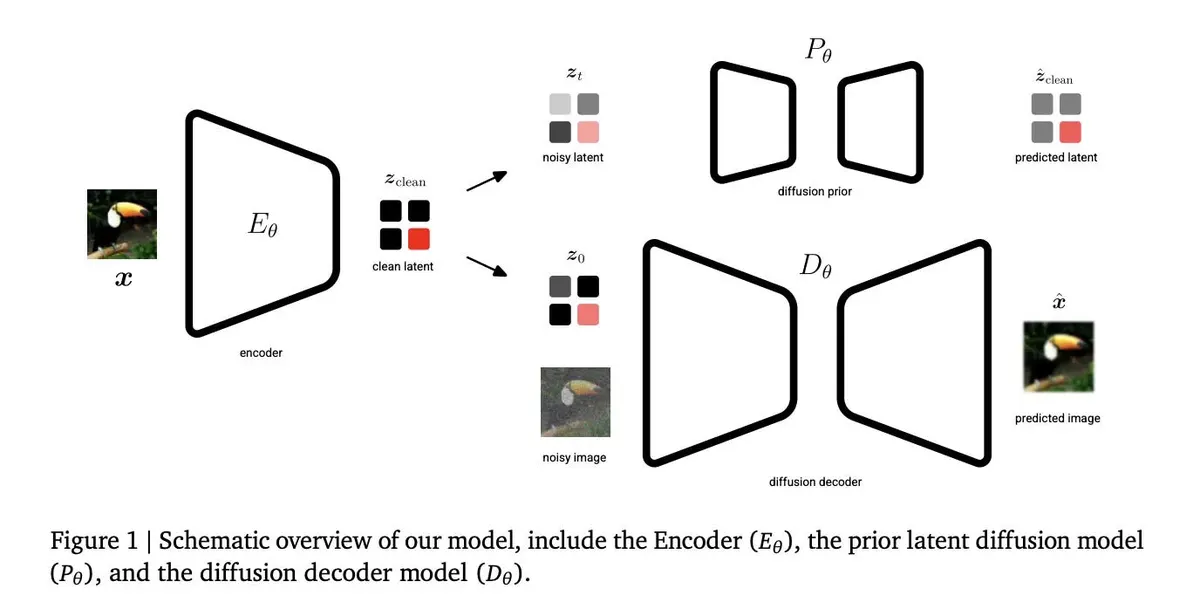
Generative AI’s current trajectory relies heavily on Latent Diffusion Models (LDMs) to manage the computational cost of high-resolution synthesis. By compressing data into a lower-dimensional latent space, models can scale effectively. However, a fundamental trade-off persists: lower information density makes latents easier to learn but sacrifices reconstruction quality, while higher density enables near-perfect reconstruction but demands greater modeling capacity.
Google DeepMind researchers have introduced Unified Latents (UL), a framework designed to navigate this trade-off systematically. The framework jointly regularizes latent representations with a diffusion prior and decodes them via a diffusion model.
Source: https://arxiv.org/pdf/2602.17270